
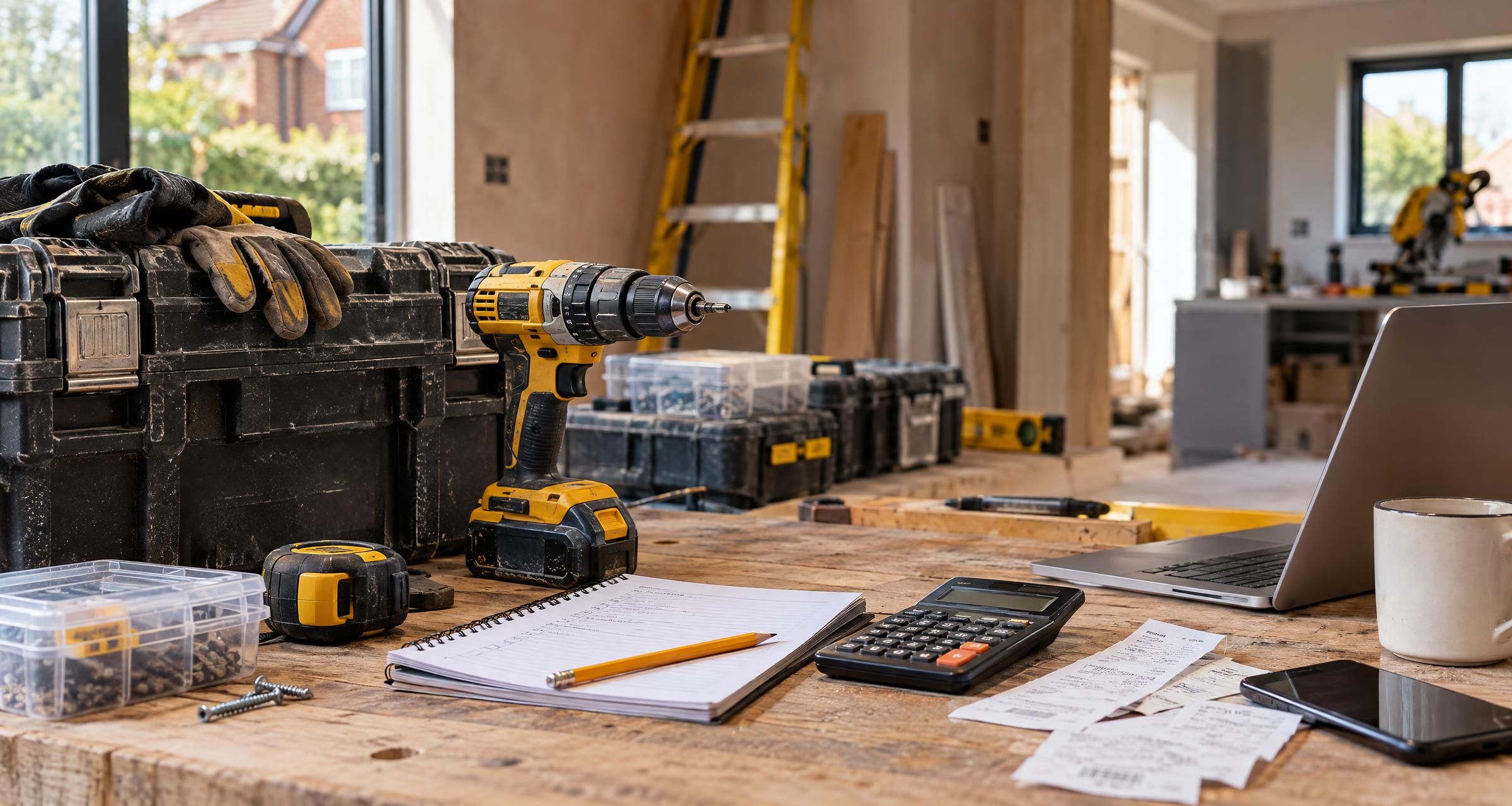
Can Tradespeople Claim Tools Against Tax?
Can Tradespeople Claim Tools Against Tax? In many cases, yes. Tools are a genuine cost of doing business, whether you are a sole trader fitting kitchens, a limited company electrician, a plumber replacing boilers or a builder carrying out refurbishment work. The key is claiming them correctly, keeping evidence and separating genuine business purchases from personal spending.
Getting this right can reduce your taxable profit and protect cash flow. Getting it wrong can create problems if HMRC asks questions later. The difference often comes down to what you bought, how much it cost, how you use it and whether you are operating as a sole trader, partnership or limited company.
This article explains how tool expenses generally work for UK tradespeople, what records you need, when capital allowances may apply and the common mistakes that can cost you money.
Can Tradespeople Claim Tools Against Tax? The Short Answer
Self employed tradespeople can usually claim the business cost of tools and equipment against taxable profits. This includes everyday hand tools, power tools, larger equipment and replacement items, provided they are bought wholly and exclusively for business use.
The tax treatment is not always the same for every purchase. A set of drill bits, blades, sealants or a replacement tape measure will often be treated as a normal business expense. A £900 combi drill kit, £1,500 laser level package or £3,000 pipe threading machine may be treated as plant and machinery, which is usually claimed through capital allowances.
For many small trade businesses, the practical outcome is similar. The purchase reduces taxable profit. The accounting route differs, and that matters if you are preparing your own return, using bookkeeping software or working with an accountant.
HMRC sets out the broad rules for self employed expenses on its expenses if you are self employed guidance. If you operate through a limited company, the company claims qualifying costs against its own profits rather than putting them on your personal Self Assessment return.
What Counts as a Tool or Business Equipment?
Tools are not just drills and screwdrivers. A working trades business may have a wide range of purchases that support delivering jobs safely and efficiently.
Common examples include:
- Hand tools such as hammers, chisels, levels, pliers, spanners, saws and measuring equipment.
- Power tools such as drills, grinders, sanders, routers, nail guns and mitre saws.
- Trade specific equipment such as pipe benders, testers, thermal cameras, tile cutters, dust extractors and access equipment.
- Tool storage, including lockable boxes, racking and secure cabinets used for business equipment.
- Safety equipment such as safety boots, hard hats, eye protection, gloves, masks and hearing protection where it is genuinely protective workwear.
- Consumables such as drill bits, blades, sanding discs, batteries, fixings, sealants and cutting wheels.
- Repair and maintenance costs for existing business tools.
Some purchases sit close to the line. A standard pair of jeans or ordinary jacket is unlikely to qualify simply because you wear it to work. Branded uniforms and protective clothing can be treated differently. Everyday clothes that could be worn privately are generally not allowable.
Tools bought for a job but charged on to a client should also be handled carefully. If you buy a specific item that stays with the customer, such as a sink, radiator or extractor fan, it is normally a materials cost rather than a tool. Keep that separate from equipment you retain and use across jobs.
Revenue Expenses Versus Capital Allowances
This is the area that causes most confusion. Your business can claim both day to day running costs and larger equipment purchases, but the tax treatment can differ.
Day to day expenses
Smaller or short life items are often treated as ordinary expenses. Typical examples are replacement blades, drill bits, PPE, tool repairs, replacement batteries and consumables. These are recorded as costs in your accounts and reduce profit for the period.
If you replace a broken £25 spirit level, £18 set of hole saws or £70 grinder disc pack, these are normally straightforward business costs. Keep the receipt and record what the purchase was for.
Capital equipment
Longer lasting equipment is usually classed as capital expenditure. This includes equipment you use over several jobs or accounting periods, such as a table saw, scaffold tower, electrical test equipment, large generator or professional dust extraction system.
Rather than treating the purchase as a normal expense, you may claim capital allowances. The Annual Investment Allowance often allows qualifying plant and machinery to be claimed in full in the year it is purchased, subject to rules and limits. For most small trades businesses, this can mean the tax effect is still immediate.
The current Annual Investment Allowance is £1 million for qualifying expenditure, though most sole traders and small companies will be well below this level. HMRC explains the rules in its Annual Investment Allowance guidance.
| Purchase | Typical treatment | Example cost | Practical record needed |
|---|---|---|---|
| Drill bits, blades and sanding discs | Day to day expense | £15 to £120 | Receipt and business purpose |
| Replacement battery or charger | Usually a day to day expense | £60 to £250 | Receipt and tool details |
| Professional combi drill kit | Often plant and machinery | £250 to £900 | Invoice, purchase date and business use |
| Electrical testing equipment | Often plant and machinery | £500 to £2,500 | Invoice, serial number and calibration records |
| Large site equipment | Capital allowance may apply | £1,000 to £10,000 or more | Invoice, finance agreement and asset record |
You do not need to become a tax specialist to run a good trade business, but you do need a reliable process. A bookkeeper or accountant can classify larger purchases correctly and save you trying to repair a year of poor records at the end of January.
How Your Business Structure Affects the Claim
Sole traders
A sole trader usually includes allowable tool costs in the self employment section of their Self Assessment tax return. You pay tax on profit after allowable business expenses, not on total money received from customers.
For example, if your annual sales are £65,000 and allowable expenses, including tools, materials, van costs and insurance, total £28,000, your taxable business profit starts at £37,000 before any other relevant adjustments.
If you buy a £1,200 professional tool package used wholly for work, it may reduce taxable profit through an expense claim or capital allowances, depending on the accounting method and classification.
Limited companies
If you trade through a limited company, the company should buy the tools and claim the allowable cost against company profits. The equipment belongs to the company, even if you use it day to day.
Avoid casually paying for significant company tools from your personal account without recording it. Your accountant can usually account for this as money you have introduced to the company or reimburse you, but the paperwork needs to match what happened.
For expensive purchases, pay directly from the company bank account where possible. Keep the invoice in the company name. This makes ownership, VAT records and insurance arrangements clearer.
Partnerships
In a partnership, tools owned and used by the partnership should normally be recorded in the partnership accounts. If one partner buys their own tools, the correct treatment depends on whether the item is a personal cost or a partnership asset. Agree this early, particularly where partners contribute different equipment.
Claim Only the Business Portion of Tools
The basic rule is that you can claim the business part of a cost. If a tool is used only for paid work, the position is straightforward. If you use it for home DIY, a family project or a hobby, you need to make a fair adjustment.
For example, a decorator buying a £300 sprayer used almost entirely on customer work but occasionally on their own home may reasonably claim the business proportion. A carpenter buying a £450 saw mainly for renovating their own property cannot put the full cost through the business simply because it is also used on occasional jobs.
There is no magic percentage that makes an expense acceptable. HMRC would expect a reasonable basis supported by the facts. If private use is minor and incidental, make a sensible note. If use is mixed regularly, keep a more deliberate record.
The same applies to mobile phones, vans, laptops and workshop space. A good habit is to ask one question before buying: would I have bought this item at this cost if I did not run the business? If the honest answer is no, it is more likely to be a business cost.
VAT on Tools and Equipment
If you are VAT registered, you may usually reclaim VAT on tools bought for your taxable business activities. You must have a valid VAT invoice for purchases over £250, and a simplified VAT invoice may be sufficient for lower value purchases.
You cannot reclaim VAT on the private part of a mixed use purchase. If you are not VAT registered, the gross amount you paid, including VAT, is generally the business cost for income tax or corporation tax purposes.
Be careful with online marketplaces, second hand purchases and private sellers. A receipt showing a total amount paid does not always mean there is recoverable VAT. Check whether the seller is VAT registered and whether the invoice shows the VAT amount and registration number.
A £600 tool kit including £100 VAT is effectively a £500 net cost to a VAT registered business that can fully reclaim the VAT. That can make a meaningful difference to purchasing decisions, but do not buy equipment purely to recover tax or VAT. You still spend the majority of the money.
Buying, Leasing and Financing Tools
Buying outright is often simplest. You own the tool, it can be insured as part of your business equipment and the tax claim is easier to follow. The drawback is the immediate cash outlay.
Leasing, hire purchase and trade finance can spread the cost of larger equipment. This can be useful for a £2,000 dust extractor, £3,500 test kit or £5,000 access platform where the equipment will help you complete profitable work now.
The tax position depends on the agreement. Under hire purchase, capital allowances may often be available on the full qualifying equipment cost, while the interest element is usually treated separately. Under a lease or rental arrangement, the rental payments may be deductible as a business expense. The exact position depends on the contract, so send it to your accountant before signing.
Compare the total payable, not just the monthly figure. A £2,400 machine funded at £120 a month for 24 months costs £2,880 before any fees. If it allows you to complete more work, improve quality or avoid regular hire charges, it may still be worthwhile. If it sits in the van unused, the tax relief will not rescue a poor buying decision.
For a fuller comparison of ownership and funding routes, read Leasing vs Buying Tools: What’s Best for New Tradespeople?.
Keep Records That Stand Up to Scrutiny
Receipts are not admin for admin’s sake. They prove what you bought, when you bought it, who supplied it and how much it cost. They also make it easier to claim everything you are entitled to.
HMRC generally requires self employed people to keep records for at least five years after the 31 January filing deadline for the relevant tax year. Limited companies normally need to retain accounting records for at least six years from the end of the financial year.
A practical tool purchase record should include:
- Date of purchase.
- Supplier name.
- Description of the item.
- Total cost and VAT amount where applicable.
- Payment method.
- Whether it was wholly business use or mixed use.
- Serial number for high value items.
- Where the tool is stored or normally kept.
- Insurance details for expensive equipment.
Photograph receipts as soon as you get them, especially thermal receipts that fade. Save them into bookkeeping software or a clearly named cloud folder each month. Do not leave a glovebox full of receipts until the tax return deadline.
For high value items, record serial numbers and take photographs. This helps with tax records, insurance claims and police reports if tools are stolen. Tool theft can put work on hold and create a double hit of replacement cost and lost earning time. Practical security measures and suitable cover are covered in Tool Theft: How to Prevent It and Why Insurance Is Essential for Tradespeople.
Repairs, Replacements and Upgrades
Repairing an existing business tool is normally an allowable running cost. Replacing a worn chuck, repairing a cable, servicing a nail gun or paying for calibration of testing equipment usually keeps an existing asset working rather than creating something new.
An upgrade can be different. If you turn a basic system into a materially better or more capable piece of equipment, the cost may be capital expenditure. For example, replacing a broken battery in a drill is a repair. Buying a new £1,800 cordless kit with multiple tools is a new asset.
Do not assume that buying a cheaper tool is always the most cost effective route. A £55 grinder that needs replacing twice a year can cost more than a £160 professional model that lasts, performs better and causes fewer delays. There is also downtime, customer disruption and the risk of lower quality finishes to consider. The Hidden Costs of Cheap Tools: A Smart Guide for UK Tradespeople explores the wider commercial impact of buying on price alone.
What Happens if Tools Are Stolen, Lost or Sold?
Tools do not always stay in the business until they wear out. They can be stolen from a van, damaged beyond repair, sold second hand or traded in against new equipment. Each situation can affect the tax position.
If a tool is stolen and you receive an insurance payment, that payment may need to be reflected in your capital allowance calculations. If you sell an item or receive a part exchange allowance, the sale proceeds can also affect the amount you can claim.
Keep the original purchase invoice, police crime reference number where relevant, insurance correspondence, settlement statement and evidence of any replacement purchase. Do not simply post a replacement tool as a new expense and ignore the insurance settlement.
Where the figures are significant, ask your accountant to deal with the disposal or insurance proceeds. This is especially relevant for large plant, specialist diagnostic equipment, machinery and vehicles.
Tools Bought Before You Started Trading
Many tradespeople build a kit before registering as self employed or before setting up a company. You may still be able to claim for tools you owned before trading if they are brought into the business and used for business purposes.
The claim is usually based on the item’s market value when introduced to the business, rather than automatically the original purchase price. A five year old saw bought for £600 may have a much lower value by the time the business starts.
Make a list of pre trading tools, including the estimated market value, original receipt if available, age, condition and serial number. Be realistic. Overstating the value of old equipment is an unnecessary risk for a relatively modest tax benefit.
If you have a substantial pre existing kit, an accountant can help establish a sensible opening asset schedule. This is worthwhile if the tools include specialist equipment worth several thousand pounds.
Common Mistakes That Cost Tradespeople Money
Missing small purchases
A £9 pack of blades, £22 safety glasses, £35 lock, £48 battery and £75 tool repair may not feel worth recording individually. Over a year, these costs can add up to hundreds or thousands of pounds. Use a business card or separate bank account so purchases are visible.
Claiming personal DIY equipment
Tax relief is for business expenditure, not for improving your own house. Mixed use tools need a fair split. Keep personal spending separate wherever possible.
Failing to keep invoices
A bank statement proves you spent money but does not always prove what you bought. An invoice is much stronger evidence and is essential for VAT recovery in many cases.
Buying equipment without checking whether it earns its keep
Tax relief might save a basic rate taxpayer a portion of the cost, but it does not make unnecessary purchases free. Before spending £1,500, consider how many jobs it will serve, whether you could hire it, what it saves in labour time and whether it helps you win better work.
Using poor descriptions in accounts
Entries labelled “tool shop” or “hardware” give little context. Record “replacement cordless drill batteries”, “electrical installation tester” or “PPE for site work”. Clear descriptions reduce questions later.
A Practical Process for Claiming Tools Properly
- Buy through the business where possible. Use a dedicated business bank account or card, even as a sole trader.
- Get the correct invoice. Check the date, supplier, description, VAT details and total are visible.
- Photograph and upload the receipt. Do this on the day of purchase before it gets lost.
- Classify the purchase. Record consumables, repairs, PPE and larger equipment separately.
- Record business use. Make a short note where private use is possible.
- Add high value tools to an asset register. Include serial numbers, cost, purchase date and storage location.
- Review monthly. Match purchases against bank statements and flag anything unclear while you still remember it.
- Discuss larger purchases before year end. Your accountant can advise on timing, capital allowances, finance and VAT.
This process should take minutes per purchase and perhaps one hour each month. It is far cheaper than paying an accountant extra to reconstruct a year of transactions or missing legitimate relief because records are incomplete.
Tax Planning Should Support Better Job Decisions
Tools are an investment in the standard and range of work you can offer. A good tool can reduce labour time, improve finishing quality, help you work more safely and reduce call backs. Those benefits are often worth more than the tax deduction.
Before buying, link the purchase to a commercial reason. A £700 wall scanner may help an installer avoid costly damage. A £1,200 dust extraction setup may reduce cleaning time and make occupied home jobs easier to complete professionally. A £2,000 testing kit may support a qualified electrician delivering services they are competent and properly equipped to provide.
Do not take on regulated work just because you own the equipment. Gas work requires the appropriate registration with the Gas Safe Register, and electrical work may have notification requirements depending on the work and location. Tools support competence but do not replace training, qualifications, insurance or compliance.
Winning the right jobs also improves the return on your equipment. A well presented profile, clear service area, accurate job descriptions and prompt communication can help you attract enquiries suited to your trade. BookaBuilderUK can form part of that approach by helping tradespeople get in front of homeowners looking for real improvement work. Use it alongside sensible pricing, clear quotes and a portfolio that reflects the jobs you want more of.
Your Next Seven Days: Tool Tax Checklist
- Gather the last three months of tool, PPE and consumables receipts.
- Match each purchase to your bank statement or business card transaction.
- Create a simple list of high value tools with costs and serial numbers.
- Identify any personal purchases incorrectly paid from the business account.
- Check whether you have claimed all repairs, servicing and calibration costs.
- Review tool insurance limits against the replacement value of your kit.
- Ask your accountant how they want capital purchases submitted.
- Plan any necessary equipment purchases around workload, cash flow and genuine business need rather than tax alone.
Frequently Asked Questions
Can Tradespeople Claim Tools Against Tax if they are self employed?
Yes. A self employed tradesperson can usually claim the business cost of tools, equipment, repairs, consumables and qualifying protective equipment. Smaller items may be treated as ordinary expenses, while more expensive and longer lasting equipment may be claimed through capital allowances. The item must be used for business, and private use should be excluded or fairly apportioned.
Can I claim tax relief on tools bought before becoming self employed?
Potentially, yes. Tools you owned before starting can sometimes be introduced into the business at their market value when you began trading. Keep evidence of their age, condition, original cost and realistic second hand value. For an extensive kit, seek advice from an accountant so the opening records are sensible and supportable.
Can I claim VAT back on tools?
You can usually reclaim VAT on qualifying business tool purchases only if you are VAT registered and have appropriate VAT evidence. You cannot reclaim VAT on private use, and a receipt from a private seller or non VAT registered seller will not normally support an input VAT claim.
Are tool repairs tax deductible?
Usually, yes. Repairing, servicing or maintaining business tools is normally an allowable business expense because it keeps existing equipment in working condition. A major improvement or replacement with a significantly better asset may need different treatment, especially if it creates a new piece of equipment with a longer working life.
Can I claim tools if I paid with my personal bank card?
Yes, provided the purchase was genuinely for the business and you keep the invoice. Sole traders can record the cost in their accounts. Limited company directors should ensure the payment is correctly recorded, usually as an expense owed back to them by the company or money introduced into the business. Using a separate business card going forward makes records easier to manage.
Final Thoughts
Most tradespeople can claim legitimate tool costs against tax, but the value is in doing it accurately and consistently. Keep receipts, record business use, separate large equipment from everyday consumables and ask for advice before making major purchases or entering finance agreements.
Tax relief should support sound buying decisions, not drive them. Buy tools that help you work safely, deliver better results, save time and take on work that fits your skills and business plan.
If you want another way to get in front of homeowners seeking skilled tradespeople, visit BookaBuilderUK and consider how it can support your wider approach to finding suitable work.


