
Does Facebook Advertising Work for Builders?
Does Facebook Advertising Work for Builders? It can, but only if you treat it as a local lead generation channel rather than a place to post the occasional site photo and hope the phone rings. Facebook and Instagram advertising can put your work in front of homeowners in a defined area, at a time when they may be considering an extension, renovation, roofing repair, kitchen project or landscaping job.
For a builder, the main question is not whether Facebook adverts can generate enquiries. They can. The better question is whether the enquiries are suitable, profitable and likely to turn into jobs worth pricing. That depends on your offer, targeting, response speed, job filtering and ability to follow up properly.
Paid social advertising is rarely the best single source of work for a small building firm. It works better as part of a balanced pipeline that includes referrals, a professional website, local search visibility, repeat customers and trade platforms such as BookaBuilderUK. The aim is not to be visible everywhere. It is to create a steady flow of the right sort of opportunities without wasting evenings quoting for jobs that were never serious.
Does Facebook Advertising Work for Builders? The honest answer
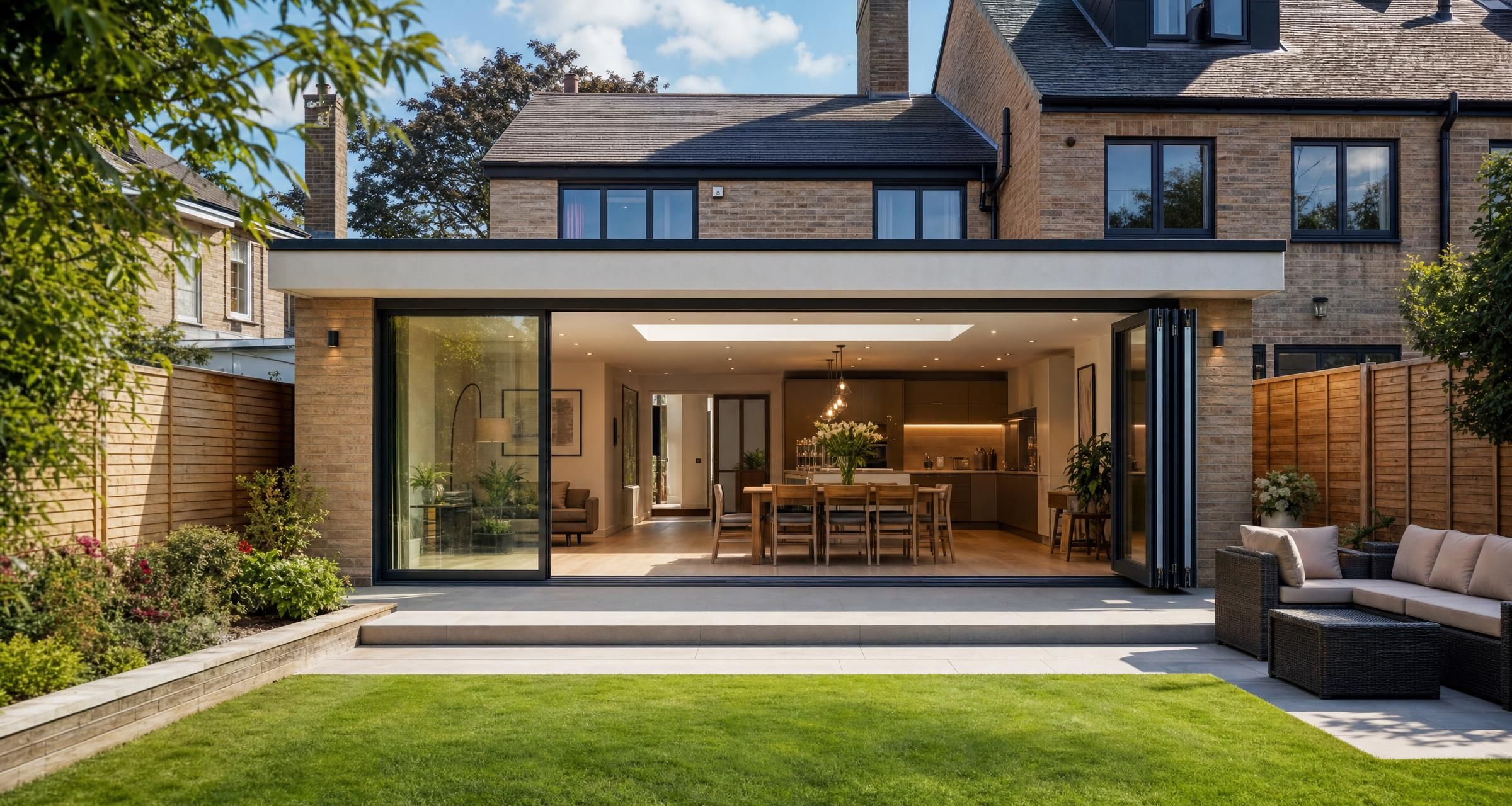
Facebook advertising can work well for builders whose work is visual, local and easy for a homeowner to understand. Before and after images of a loft conversion, bathroom refurbishment, garden wall, kitchen renovation or roof repair can create interest quickly. Homeowners often start thinking about improvements long before they search for a contractor, so an advert can reach them earlier in the decision process.
It tends to work less well for businesses that run broad adverts with no clear service, no budget filter and no process for replying. An advert saying “Builder available, message for a quote” may produce messages, but many will be vague, price focused or outside your normal area.
A better advert offers one clear service to one clear audience. Examples include:
- Garage conversions for homeowners within 15 miles of your base
- Kitchen extensions for owner occupiers in selected villages or postcodes
- Roof repairs and guttering work after poor weather
- Bathroom refurbishments with a realistic starting project value
- Brickwork repairs, garden walls and repointing for local properties
- Landscaping packages for homeowners planning work before spring
Facebook is strongest at creating awareness and generating enquiries. Search advertising is often stronger where someone already knows what they want and is actively searching for “builder near me” or “extension builder in [town]”. That difference matters. A homeowner who completes a Facebook form may need more qualification and follow up than someone who has searched online for a builder that morning.
For a fuller view of search advertising and where it may fit beside social advertising, read How investing in PPC Can Increase Your Business.
What Facebook advertising is actually good for
Facebook and Instagram adverts are useful where you can show a homeowner the outcome they want. Builders do not sell cement, blocks and labour hours. They sell a better kitchen, more usable space, a repaired roof, a warmer home or a garden that can be enjoyed again.
Visual project work
High quality project photos give Facebook advertising a real advantage. A clean before and after sequence, a short walk through video or a set of progress images can prove capability more effectively than a paragraph of claims.
Use your own work, with the homeowner’s permission. Avoid using stock images for finished projects unless they are clearly presented as inspiration rather than your work. Misleading advertising can create complaints, damage trust and make the first site visit awkward.
Seasonal services
Some building work has natural peaks. Roof repairs, drainage issues, fencing, exterior painting, rendering and garden projects may respond well to seasonal campaigns. The advert needs to match the season and the problem.
For example, a winter roof repair advert can focus on water ingress, slipped tiles and damaged flashing. A spring campaign can focus on patios, garden rooms, extensions and external repairs. Do not advertise capacity you cannot deliver. A busy advert that produces thirty enquiries in a week is not useful if you cannot visit any of them for a month.
Higher value planned projects
Extensions, conversions and full refurbishments can justify a greater advertising spend because one good job may cover several months of marketing. They also need a longer sales process. The enquiry might come in January, the site visit happen in February and work begin much later.
That means you should judge success over several months, not based on whether an advert produces a signed contract in its first week.
Where builders lose money on Facebook adverts
The advert itself is rarely the only cost. Builders often look at the daily spend and ignore the cost of taking calls, reviewing photos, arranging visits, preparing estimates and chasing decisions. If your quoting process is loose, Facebook can create a lot of unprofitable admin.
Advertising too broadly
Targeting the whole county is usually a poor starting point for a small builder. Travel time eats profit, site management becomes harder and quick return visits turn into half day disruptions. Start with the postcodes or towns where you genuinely want to work.
Think about the realistic working radius from your yard or home. A 10 mile radius may make sense in a built up area. A rural firm may need 20 or 25 miles. Include travel, parking, material collection and the chance of repeat visits in that decision.
Sending people straight to an unhelpful inbox
An advert that asks people to send a message can work, but only if someone monitors it. A homeowner who messages at 7pm and receives no reply until the following afternoon may have already contacted three other firms.
Set an automatic acknowledgement if available, but do not rely on it as the full response. Ask for the information that helps you qualify the work: postcode, job description, photos, preferred start date, approximate budget and whether the property is owner occupied.
For a stronger process after an enquiry arrives, see How to Respond to Leads Like a Pro and Win More Work.
Promoting cheap work that attracts price shoppers
“Prices from £99” is tempting because it can increase responses. It can also train the audience to expect a bargain and produce a queue of people looking for the lowest possible figure. Unless you want small reactive jobs, do not build your campaign around a headline price.
For larger work, explain the type of project you undertake and use a starting project value where appropriate. For example, “We take on kitchen renovation projects from £8,000 plus VAT, subject to specification and survey.” This will not stop every unsuitable enquiry, but it can reduce wasted visits.
Using poor images
Blurry photos, cluttered sites, dark rooms and unfinished work do not sell quality. Construction sites are naturally messy, but your marketing images should show the standard of finish, care and organisation that customers can expect.
Take photographs in daylight where possible. Capture wide shots, close details and completed rooms. Remove personal information, house numbers, vehicle registrations and anything that could compromise client privacy.
What does Facebook advertising cost for a UK builder?
Costs vary by area, audience, advert quality, project type and the competition for attention at the time. There is no honest fixed cost per lead for builders. Anyone promising one should be treated cautiously.
A sensible test budget is usually large enough to generate meaningful data but small enough that you can afford to learn. For a sole trader or small building firm, that could mean £10 to £20 a day for 14 days, giving a total media spend of £140 to £280. For higher value extension or refurbishment work, £20 to £40 a day over a month may be more realistic, provided you have capacity to respond and quote.
| Cost area | Typical starting allowance | What to watch |
|---|---|---|
| Advertising budget | £140 to £600 for an initial test | Track genuine qualified enquiries, not just messages or reactions |
| Photography or video | £0 if using good in house images, or a few hundred pounds for professional work | Get permission and reuse the assets across your website and social channels |
| Landing page improvements | From your own time to several hundred pounds | Make sure mobile users can quickly see services, area, reviews and contact details |
| Admin and follow up | Several hours each week | Include your time when judging whether the campaign is profitable |
| Site visits and estimates | Depends on distance and job type | Qualify before visiting wherever possible |
Advertising spend is generally a business cost, but record it properly and keep invoices and payment records. HMRC explains the rules around allowable business expenses in its guidance on expenses if you are self employed. If you are VAT registered, take advice from your accountant on how advertising invoices and VAT should be recorded for your circumstances.
The return is not simply revenue divided by advert spend. You need to account for labour, materials, subcontractors, plant, waste removal, insurance, travel, estimating time, defects risk and overhead recovery. A £15,000 renovation with a thin margin is not necessarily a better result than a £5,000 repair package with strong margin and little management time.
Set up your advert around a profitable service
Start with a service you understand commercially. You should know the usual job value, expected margin, likely duration, labour requirement and common variations before you spend money advertising it.
Choose one campaign objective
Do not try to promote extensions, roofing, kitchens, bathrooms, brickwork, landscaping and emergency repairs in one advert. The homeowner should immediately understand what you do and why they should contact you.
A good campaign objective might be to arrange qualified site visits for garage conversions. Another might be to collect photo based enquiries for small roofing repairs within a limited area. Different jobs need different questions and response times.
Build a clear offer
Your offer does not need a discount. In fact, discounting construction work before you know the specification can cause problems. The offer can be a free initial discussion, a site survey for suitable projects, a written estimate, a design and build consultation, or a clear statement that you take on a defined type of work.
Be accurate. Do not call a visit “free” if you intend to charge for detailed designs, measured drawings or a formal scope. Explain what the homeowner receives and what happens next.
Write advert copy that filters as well as attracts
Strong advert copy answers five questions quickly:
- What work do you carry out?
- Which areas do you cover?
- Who is the service for?
- What evidence of quality can you show?
- What should the homeowner do next?
For example:
Planning a garage conversion in the Nottingham area? We carry out practical, well managed conversions for homeowners who need an office, bedroom or family room. Send your postcode, a few photos and your target timescale to discuss whether your project is suitable for a site visit.
This is better than “Local builders, contact us today” because it identifies the service, location, outcome and next action. It also asks for information that helps you qualify the lead.
Use proof, not vague claims
Homeowners are cautious about major building work. Give them reason to trust you without making claims you cannot support. Useful proof includes your own project images, clear descriptions of the process, insurance details where relevant, genuine reviews you are entitled to use, accreditations you actually hold and confirmation that specialist work is handled by appropriately registered people.
For example, gas work must be carried out by a suitably registered engineer. Electrical work may involve notification requirements depending on the work and location. Do not use an advert to imply that you personally hold qualifications or registrations that belong to a subcontractor or another firm.
Target locally without wasting budget
Facebook has targeting options, but local building work still needs common sense. The more narrowly you define an audience, the harder it can be for the system to deliver adverts consistently. The broader you go, the more irrelevant enquiries you risk receiving.
Start with geography first. Choose the towns, postcodes or radius that make commercial sense. Then let the advert creative do more of the filtering by clearly naming the job type and likely customer.
Avoid assuming that interests will perfectly identify homeowners ready to build an extension. Interest based targeting can be imperfect. Test a locally focused audience with strong job specific copy against a slightly more filtered version, then compare qualified enquiries rather than clicks.
If you work in a high value area, do not make assumptions about a customer’s budget based on their postcode. Use your qualification process instead. Ask what they want done, whether plans are available, when they would like to start and whether they have a working budget range.
Protect your time with a proper lead qualification process
Facebook advertising becomes much more viable when you stop treating every message as an automatic site visit. A site survey is valuable professional time. Use it where the job has a realistic chance of proceeding.
Ask these questions before booking a visit
- What is the full property postcode?
- What work are you looking to have done?
- Can you send recent photos or a short video?
- Do you own the property or have authority to arrange the work?
- Do you have drawings, structural information or a specification?
- What timescale are you working towards?
- Do you have a budget range in mind?
- Are you collecting estimates only, or ready to appoint a contractor?
You do not need to interrogate people. Keep the tone helpful. Explain that the questions allow you to establish whether you are the right firm and prepare properly for a visit.
For a small repair, photos and a phone call may be enough to provide a guide price or book work. For an extension or structural alteration, you may need plans, engineer details, planning information and a paid pre construction consultation before producing a detailed estimate.
Set expectations about pricing
Many disputes begin because customers think an initial figure is a fixed quote. Be clear whether you are giving a ballpark range, an estimate or a fixed quotation. For variable work, such as opening up walls, drainage investigation or renovation work in older properties, explain what is excluded and how unknown conditions will be handled.
Put major points in writing. Include the scope, specification, payment stages, provisional sums, start assumptions, change process, waste arrangements and VAT position. For domestic work, clear paperwork protects both the customer and your cash flow.
Legal, privacy and advertising checks
Facebook adverts do not remove your normal responsibilities as a business. What you say in an advert, how you use customer data and the claims you make about price or availability all matter.
Data protection and enquiry forms
If you collect names, telephone numbers, addresses, photographs or project details through an advert or website form, you are processing personal data. Keep it secure, use it only for the purpose you have explained and do not keep it indefinitely without reason.
If you install tracking tools on your website or use remarketing, check your privacy notice and cookie approach. The Information Commissioner’s Office guidance on UK GDPR is a useful starting point for small businesses handling customer information.
Do not upload a contact list into advertising systems unless you have a lawful basis for doing so and have considered what you told those people about marketing. A past customer who hired you to repair a wall did not automatically agree to receive adverts about loft conversions.
Honest pricing and claims
Do not state a price unless you can support it and explain significant conditions. Do not advertise “no hidden costs” if there may be extra charges for structural steel, access equipment, asbestos removal, waste, electrical work or changes requested by the customer.
Similarly, do not claim you are “the best builder” or “number one” unless you can substantiate it. Specific, supportable statements are better: “fully insured”, “Gas Safe registered subcontractors used where required”, or “written quotations provided for agreed scopes”, provided each is true.
Safety is not marketing copy
Images showing unsafe work can undermine confidence and create risk. Do not post photos of people working at height without appropriate controls, unsafe excavation, missing guarding or poor manual handling. The Health and Safety Executive provides guidance on construction health and safety, including the duties that apply on construction work.
For larger projects, consider how your advert promises will fit with your actual responsibilities around planning, building control, CDM duties, specialist surveys and competent subcontractors. A quick marketing promise should never force a rushed or unsafe job.
How to measure whether your adverts are paying their way
Likes, comments and video views can be useful signals, but they do not pay wages. Measure the journey from spend to profit.
Create a simple spreadsheet or job tracking system with these fields:
- Date the advert enquiry arrived
- Campaign and advert used
- Service requested
- Location
- Estimated job value
- Whether the lead was qualified
- Whether a visit was booked
- Quote value
- Job won or lost
- Reason for loss where known
- Expected gross profit
Review the data after enough time has passed for leads to develop. A roofing repair campaign might show results within days. An extension campaign may need several weeks or months before the homeowner makes a decision.
Look for patterns. If one campaign gets plenty of leads but no site visits, improve the filtering. If site visits happen but quotes are not accepted, review price positioning, scope clarity, follow up and whether the leads were a genuine fit. If jobs are won but margins are weak, the problem is not advertising. It is estimating, variation control or job costing.
Facebook adverts, your website and local job platforms
Paid social works best when it sends people somewhere credible. Some homeowners will click an advert, view your profile, look for reviews, check your website and only then get in touch. If they find an incomplete page, no recent work, no clear contact details or no explanation of your services, you lose trust before the first conversation.
Your website should show the work you want to win, the locations you serve, examples of completed projects and an easy way to enquire. Read Why Every Tradesperson Needs a Professional Website for practical reasons a professional site supports your wider marketing.
BookaBuilderUK can also form part of a sensible mix. It gives tradespeople another route to be seen by homeowners who are actively looking to get work done. That differs from Facebook, where you are paying to interrupt people while they browse. A business may use Facebook to showcase a particular service and BookaBuilderUK to create opportunities with homeowners already seeking suitable tradespeople.
For more ways to build a local pipeline beyond paid advertising, see How to Get More Local Jobs as a Tradesperson in 2025.
A practical 30 day Facebook advertising plan for builders
- Choose one service. Pick a job type with clear demand, decent margin and capacity in your diary. Do not start with every service you offer.
- Define your area. Select the locations you can serve profitably, including realistic travel and parking considerations.
- Prepare your proof. Gather six to ten strong photos, customer permissions where needed, a short service description and evidence of relevant competence.
- Improve your enquiry route. Use a simple form or message process that asks for postcode, photos, job description and timescale.
- Set a test budget. Use a daily amount you can afford for at least two weeks. Avoid changing everything after one day.
- Reply quickly. Aim to acknowledge and assess genuine enquiries promptly. Slow replies waste paid leads.
- Qualify before visiting. Check job type, location, budget expectations and decision readiness.
- Track every outcome. Record not just leads, but visits, quotes, wins, losses and expected gross profit.
- Review after 30 days. Keep, adjust or stop the campaign based on qualified work and commercial return.
Do not increase spend simply because a campaign receives messages. Increase only when you can show that the campaign is producing profitable work or a credible pipeline of suitable projects.
Common mistakes builders should avoid
Trying to compete only on price
Facebook makes it easy for homeowners to message several firms. If your advert is mainly about being cheap, you will often compete with businesses willing to underprice work or omit key costs. Sell clarity, workmanship, communication and suitable project experience instead.
Not answering the phone
A missed call is not always a lost job, but repeated missed calls and slow message replies will undermine paid advertising. If you are on the tools all day, arrange a routine for checking enquiries at lunch, after work and early evening. If workload permits, consider whether an office assistant or call handling service would save enough time to justify its cost.
Quoting without enough information
Do not price a complex refurbishment from three dark photos and a one line message. Give a guide only where appropriate, then inspect, measure and clarify the scope. Rushed quotations often become loss making jobs.
Ignoring the job after it is won
The best advertising asset is a completed job and a satisfied homeowner. Ask for permission to photograph work, request a genuine review and maintain contact professionally. One well documented project can support future advertising, website content and local reputation.
FAQ
Does Facebook Advertising Work for Builders with a small budget?
It can, provided the campaign is tightly focused. A small budget should promote one service in one local area, using strong images and a clear enquiry process. Spending £10 to £20 a day can be enough to test whether people respond, but it may not be enough to establish a reliable cost per job straight away. Track qualified enquiries and won work before deciding whether to continue.
Should builders advertise on Facebook or Google?
They serve different purposes. Facebook can create awareness and show visual transformation work to local homeowners who may be considering a project. Google can capture people actively searching for a builder or a specific service. Many businesses use both at different times, but a small firm should test one clear campaign at a time and measure the quality of the work it brings in.
How much should a builder spend on Facebook adverts?
Start with an amount that allows at least two weeks of consistent testing, often around £140 to £280 in advertising spend for a basic local campaign. Higher value services may warrant a larger budget, but only if you have a good follow up process and room in the diary. Include your own estimating and site visit time in the true cost.
What type of building work is best to advertise on Facebook?
Visual, clearly defined and locally deliverable services tend to be easier to promote. Examples include garage conversions, bathrooms, kitchens, roofing repairs, brickwork, landscaping and smaller refurbishment packages. Large extensions can work too, but the sales process is longer and needs more careful qualification.
Do I need a website before running Facebook adverts?
You can generate enquiries through messages or forms, but a professional website adds credibility and gives homeowners somewhere to check your work, services and contact details. At a minimum, make sure your business information is consistent, your completed work is presented well and you have a reliable way to respond to enquiries.
Final Thoughts
Facebook advertising can be worthwhile for builders, but it is not a switch you turn on to fill the diary. It rewards firms that know which work they want, price profitably, show genuine evidence of quality and respond quickly. Start small, filter hard, measure properly and only scale what brings in suitable work.
Tradespeople looking for another way to get in front of homeowners with building work to complete can use BookaBuilderUK alongside Facebook advertising, referrals and local search as part of a balanced pipeline.


