
Drain Relining Costs
Drain relining costs in the UK usually range from £500 for a small local patch repair to £3,500 or more for a full length sewer liner. The final price depends on the pipe diameter, length of damage, access, depth, whether the drain is shared, and the preparation work needed before lining can begin.
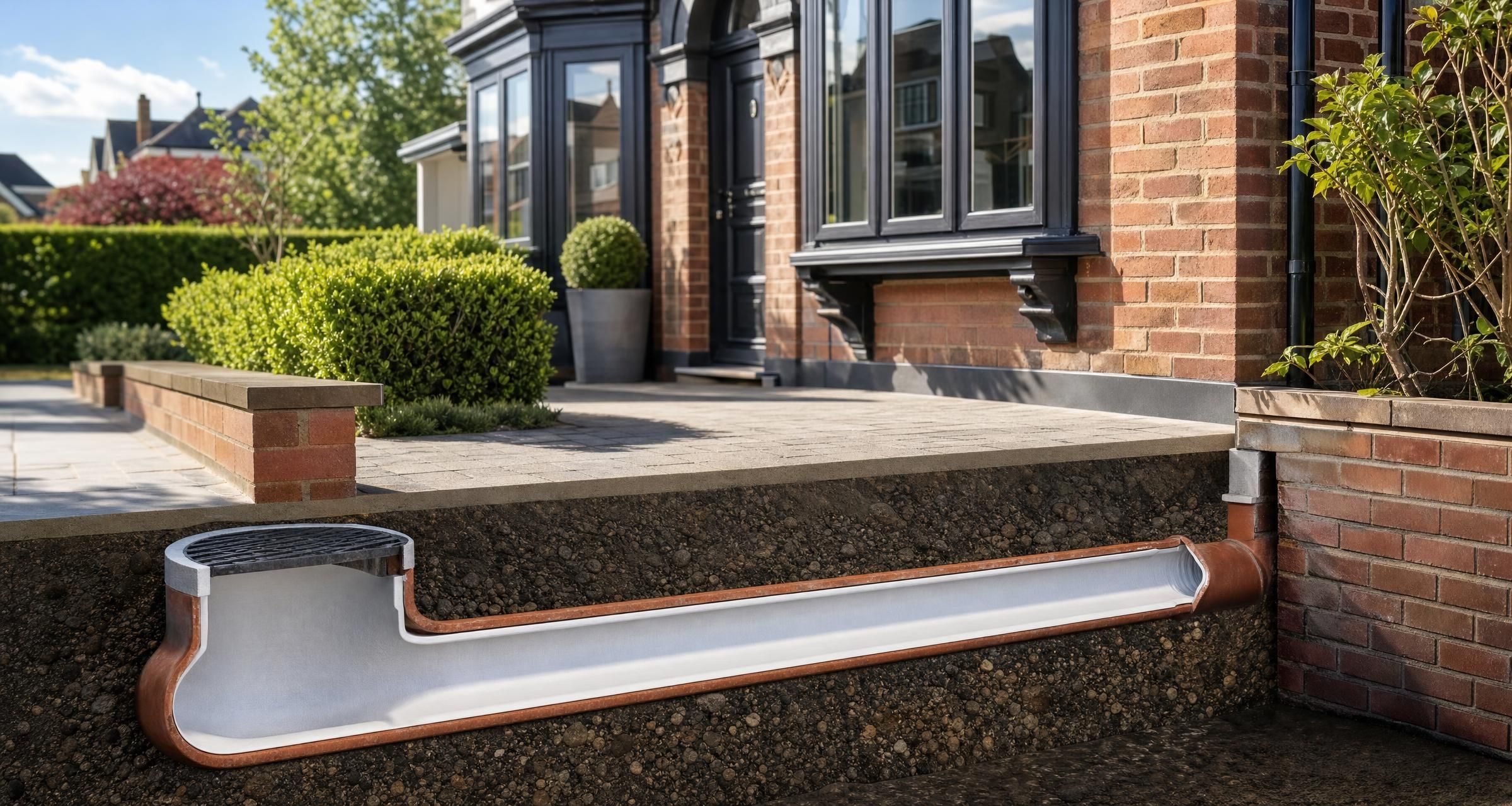
Relining is often the most practical alternative to excavation. Instead of digging up a driveway, patio, lawn or internal floor, a drainage contractor installs a resin impregnated liner inside the existing pipe. Once cured, the liner forms a new pipe within the old one, sealing cracks, displaced joints, small holes and root entry points.
It is not suitable for every drainage defect. A badly collapsed pipe, severe deformation, a drain with major backfall, or a section full of loose rubble may still need excavation and replacement. A proper CCTV survey is the starting point, not an optional extra.
Typical drain relining costs in the UK
Most household drainage jobs fall into one of three categories. A patch liner deals with a specific fault, a short liner repairs a run between inspection chambers, and a full liner rehabilitates a longer stretch of pipe.
| Type of work | Typical UK cost in 2026 | What is usually included | Typical time on site |
|---|---|---|---|
| CCTV drainage survey | £150 to £350 | Camera inspection, footage or report, fault location and condition assessment | 1 to 2 hours |
| Drain cleaning before relining | £150 to £400 | Jetting, root cutting where possible, removal of scale, silt and debris | 1 to 3 hours |
| Small patch liner | £500 to £900 | Repair commonly around 300mm to 1 metre long | 2 to 4 hours |
| Standard patch liner | £800 to £1,400 | Repair of a cracked joint, hole, root damaged section or small fracture | Half day |
| Short drain liner, 3 to 5 metres | £1,200 to £2,200 | Cleaning, liner installation and post installation CCTV check | Half day to 1 day |
| Full liner, 10 metres | £2,000 to £3,500 | Installation in a domestic foul or surface water drain, subject to access | 1 day |
| Long or complex lining, 20 metres plus | £3,500 to £7,000 plus | Long runs, larger diameter pipes, multiple branches or difficult access | 1 to 3 days |
| Excavation and drain replacement | £2,000 to £6,000 plus | Digging, pipe replacement, bedding, backfill and basic reinstatement | 1 to 5 days |
Prices normally include labour, resin liner materials, calibration equipment and a final CCTV inspection. They may not include initial investigation, jetting, root removal, reopening branch connections, traffic management, reinstatement of specialist paving, or work in public highway land.
London, the South East and locations with restricted parking or difficult access commonly sit at the upper end of these ranges. Emergency work outside normal hours can add £100 to £300 or more before repairs begin.
What is drain relining and how does it work?
Most domestic drain lining uses cured in place pipe technology. The contractor measures the damaged run, prepares a flexible liner made from felt or glass fibre material, saturates it with resin, and inserts it through an inspection chamber or access point.
The liner is then expanded against the inside wall of the old pipe using air or water pressure. It cures in position and creates a continuous internal sleeve. Depending on the resin system, curing may take from around 30 minutes to several hours. Hot water, steam or ultraviolet curing can be used on larger or more specialised schemes.
For a local defect, a patch liner is placed only over the fault. This is often the best value solution for isolated root ingress at one joint, a short crack or a small hole caused by corrosion.
For a longer run with repeated joint failures, a full liner can avoid several excavations. The finished diameter is slightly smaller than the original pipe, but the reduction is generally minor in a correctly sized domestic installation. A contractor should assess flow capacity before recommending full length lining, especially in a small diameter pipe that already has poor falls or regular capacity issues.
What affects drain relining costs?
The advertised price for a patch can be misleading if the drain has not been inspected and cleaned. The liner itself may be only one part of the work. These are the factors that make the greatest difference to the final quotation.
Length and diameter of pipe
Longer liners use more material and take longer to install. A 100mm domestic drain is usually less expensive to line than a 150mm or 225mm run. Larger pipes need larger liners, more resin and more substantial equipment.
A contractor may quote a minimum charge for any liner installation, then charge per metre for additional length. Ask whether the quotation is based on measured length from CCTV footage or an estimate from inspection chamber positions.
Access to the drain
A straightforward pipe run between two manholes is usually efficient to line. Costs rise where the only access is through a rodding eye, where chambers are buried, where the drain passes beneath an extension, or where equipment must be carried through the house.
Restricted access also affects preparation. If a drain cannot be properly cleaned and inspected, relining should not proceed on assumptions.
Drain condition and preparation
The pipe needs a reasonably sound shape for a liner to cure properly. Roots, scale, fat deposits, protruding broken joints and loose debris must be removed first. High pressure jetting is often enough, but stubborn roots may need mechanical cutting.
Read Drain Jetting Explained for Homeowners When It Works What It Clears and When You Need a CCTV Survey if you need to understand what cleaning equipment can realistically remove before a repair is considered.
A pipe that has partially collapsed may need local excavation before lining. A liner can bridge small defects, but it cannot make a crushed pipe round again or correct a drain that has lost its gradient.
Number of junctions and branch connections
A simple straight run is cheaper than a run with several connections from gullies, soil pipes or kitchen waste pipes. After a full liner is installed, branch connections may need to be reopened remotely with a robotic cutter. This adds time, specialist equipment and cost.
Ask the contractor whether junction reinstatement is included. A cheap quote can become expensive if every branch is charged separately.
Location of the damaged pipe
Pipes beneath a lawn are generally accessible if excavation becomes necessary. Pipes beneath resin bound surfacing, block paving, a new extension, a conservatory or a tiled floor create a much stronger case for relining because reinstatement can be costly.
Where a pipe runs in the public highway, across a neighbour’s land, or beyond the property boundary, responsibility and permissions must be checked before commissioning work.
Patch lining versus full drain lining
Homeowners often assume a complete liner is always the superior repair. That is not necessarily the case. The right option depends on the CCTV findings and the remaining condition of the pipe.
| Repair option | Best suited to | Advantages | Limitations |
|---|---|---|---|
| Patch liner | One or two local cracks, leaking joints, root entry points or small holes | Lower cost, fast installation, limited reduction in internal pipe size | Does not address defects elsewhere in the drain |
| Full length liner | Repeated joint defects, widespread cracking, multiple root entry points | Rehabilitates an entire run with no excavation in many cases | Higher initial cost, branches may need reopening |
| Excavation and replacement | Collapse, serious deformation, poor gradient, missing pipe sections | Allows falls, pipe bedding and damaged sections to be corrected | More disruption, reinstatement costs and longer programme |
A sensible contractor will explain why one approach is preferred and show you the evidence on CCTV. If there are three isolated defects over a 15 metre run, compare the price of multiple patch liners against one full liner. If only one joint is defective and the rest of the pipe is sound, a patch repair is often the more proportionate solution.
CCTV surveys before and after relining
A CCTV survey should identify the pipe material, diameter, route, level of blockage, joint condition, root ingress, fractures, displaced sections and any evidence of collapse. It should also establish whether the pipe is foul water, surface water or a combined system.
Before work starts, ask for still images or video showing the defect and a written description of its location. Drainage contractors commonly measure from an inspection chamber, but measurements can be approximate where there are bends. The report should make clear which chamber or access point the distance is measured from.
A post repair CCTV survey provides evidence that the liner is correctly seated and that branches remain open. It also gives you something useful if you sell the property or need to show a water company that private repairs have been completed.
If you are still establishing the cause of a blockage, see How Much Does Drain Unblocking Cost in 2026? Call Out Charges, CCTV Surveys and Repair Costs Explained. Clearing the immediate blockage may be enough, but recurring problems normally justify a camera inspection.
Drain ownership, water companies and building regulations
Responsibility is not always obvious. As a general rule, drains serving only your home within your boundary are likely to be private. Many shared drains and sewers are the responsibility of the local sewerage undertaker, particularly where they serve more than one property or run beyond the boundary. There are exceptions, so establish ownership before paying for a major repair.
Your water company can confirm whether a pipe is shown as a public sewer or lateral drain on its records. Do not rely only on a contractor’s view where a repair is close to the boundary or serves neighbouring homes.
For new drainage work, replacement drains and alterations, the relevant technical requirements are set out in Approved Document H, Drainage and Waste Disposal. The document covers matters including pipe gradients, access for clearing blockages, protection from damage, and separation of foul and surface water systems.
A like for like repair to an existing private drain will not usually require planning permission. However, work affecting a listed building, a conservation area, protected land, a public sewer, or a new connection can involve separate consent. For clear planning advice, use the Planning Portal guidance on drains and sewers.
Where lining forms part of building work controlled by Building Regulations, the building control body may want evidence that drainage remains serviceable. Keep your CCTV report, invoice, specification and any warranty documents.
How long does drain relining take?
A single patch liner can often be completed in half a day, including cleaning and a final camera check. A short full liner may take a day. More complicated work involving several branches, root cutting, long runs or difficult access can take two or three days.
The cure time itself is not usually the biggest delay. Investigation, jetting, removal of obstructions and setting up access take longer than many homeowners expect.
Most contractors will ask occupants to avoid using toilets, showers, washing machines and kitchen sinks while the liner is being installed. For a small local patch, this restriction may last only a few hours. For a full liner on the main foul drain, it can last most of the working day. Confirm this before the appointment, particularly in a busy household.
Common mistakes to avoid with drain relining
- Accepting a lining quote without CCTV evidence. A contractor should be able to show the defect, explain its location and demonstrate why lining is suitable.
- Repairing a blockage without finding its cause. Repeated blockages often result from roots, displaced joints, fat accumulation, poor falls or a damaged pipe. Relining a pipe that simply needs cleaning is unnecessary.
- Assuming every damaged drain can be lined. Collapsed, heavily deformed or badly misaligned pipes often need excavation and replacement.
- Not checking responsibility for a shared pipe. You may pay for work that should be investigated by the water company, or you may need agreement from neighbours if the drain is shared and private.
- Ignoring branch connections. A full liner can obstruct side connections unless they are reopened. Make sure this is shown in the scope of work.
- Comparing headline prices rather than the full scope. Check whether jetting, root cutting, CCTV surveys, resin materials, branch reinstatement, waste disposal and VAT are included.
- Failing to ask about the warranty. Obtain the guarantee in writing and establish what it covers. A warranty for liner material may not cover existing defects outside the lined section.
- Delaying repair after root ingress is found. Roots tend to return through damaged joints. A drain may keep flowing for a while, but recurring blockages and pipe movement can follow.
Signs that your drain may need relining
Drain lining is normally considered after investigation, not based solely on slow drainage. The symptoms below suggest there may be an underlying structural issue.
- Toilets, baths or sinks repeatedly back up despite professional cleaning.
- Tree roots are visible on CCTV or are repeatedly removed during jetting.
- There are damp patches, foul odours or soft ground near the drain route.
- Inspection chambers show persistent standing water or poor flow.
- A survey identifies cracked pipes, open joints, fractures or local holes.
- A property purchase survey identifies drainage defects beneath a driveway, extension or patio.
Slow drainage and odours do not automatically mean a damaged pipe. Grease, wipes, scale, trapped debris or a blocked gully can produce the same symptoms. For a clear overview of diagnosis and first steps, read Drainage Problems in Homes Explained Slow Drains Bad Smells and the Best Fixes.
Questions to ask before accepting a drain lining quote
- What does the CCTV footage show, and where exactly is the defect?
- Is a patch liner sufficient, or are there defects elsewhere in the pipe?
- Has the pipe been jetted and cleared of roots, scale and debris before pricing?
- What is the exact liner length and diameter?
- Are branch connection reinstatements included?
- Will I receive pre repair and post repair CCTV footage or reports?
- Does the price include VAT, parking, access charges and any call out fee?
- What happens if the pipe is found to be too damaged to line?
- How long is the warranty, and what is excluded?
- Is the drain private, shared or the water company’s responsibility?
The best quotations set out the diagnosis, proposed repair, measured liner length, preparation work, total cost and warranty. A vague price for “drain repair” offers little protection if extra works appear on the day.
Can insurance cover drain relining?
Some buildings insurance policies cover accidental damage to underground drains, particularly where a pipe has collapsed or been damaged by tree roots. Cover varies widely. Insurers may exclude gradual deterioration, defective workmanship, wear and tear, and damage caused by poor maintenance.
Contact the insurer before authorising expensive work if you believe the damage may be covered. They may require their own drainage contractor, CCTV evidence or approval before repairs proceed. If you arrange work first, you may make a later claim more difficult.
Keep copies of CCTV footage, written reports, photographs of any excavation, invoices and payment records. If relining is selected instead of replacement, ask the contractor to state why it was technically suitable and more cost effective.
FAQ
Is drain relining cheaper than digging up a drain?
Often, yes. The liner itself can cost more than a short length of new plastic pipe, but excavation brings labour, spoil removal, pipe bedding, backfill and reinstatement costs. Digging through a block paved drive, concrete slab, landscaped garden or extension floor can quickly make replacement more expensive than lining.
For an accessible pipe beneath soft ground, excavation may be competitive, especially if the pipe is collapsed or has poor falls. Obtain a price for both options where practical. The correct choice is based on pipe condition, not simply the lowest initial figure.
How long does a relined drain last?
A professionally installed cured liner is commonly expected to provide several decades of service. Many contractors offer warranties of 10 years or more, though the exact period and terms differ. Longevity depends on correct preparation, a suitable resin system, sound installation and the condition of the surrounding pipe.
The liner repairs the section it covers. It does not prevent future problems in unlined sections, gullies, branch pipes or manholes. Good household practice still matters, particularly avoiding wipes, fats and unsuitable items entering the drainage system.
Can a drain be lined if there are tree roots inside it?
Yes, provided the roots are removed and the pipe remains structurally suitable. Root cutting and high pressure cleaning are normally carried out before lining. The liner then seals the defective joint or crack through which roots entered.
If roots have crushed the pipe, forced joints apart significantly or caused a major collapse, the damaged section may need excavation first. Lining over active roots or loose debris is poor practice and risks an uneven repair.
Will drain lining reduce the pipe size too much?
A liner reduces the internal diameter slightly, but in a standard domestic drain this is rarely a problem where the pipe has adequate diameter, gradient and flow capacity. The contractor should account for this before installing a full liner.
Extra care is needed where the existing pipe is small, heavily scaled, poorly graded or already prone to surcharge. In those circumstances, replacement may be more appropriate because it allows the drain to be correctly sized and laid.
Do I need Building Regulations approval for drain relining?
A repair to an existing private drain does not normally need a separate Building Regulations application. However, new drainage, substantial alterations, changes associated with extensions, and work that creates or changes drainage connections can fall under Building Regulations requirements.
If the repair is linked to a larger project, ask your building control body or drainage contractor whether documentation is needed. A final CCTV report is sensible evidence that the drain remains in working order.
Final Thoughts
Drain relining can be a durable, low disruption repair for cracked drains, root damaged joints and leaking underground pipework. The strongest results come from accurate CCTV diagnosis, proper cleaning, a clear written scope and a contractor who is prepared to say when excavation is the better answer.
For reliable prices and a clear assessment of your options, post a job on BookaBuilderUK to get free quotes from vetted local tradespeople.


