
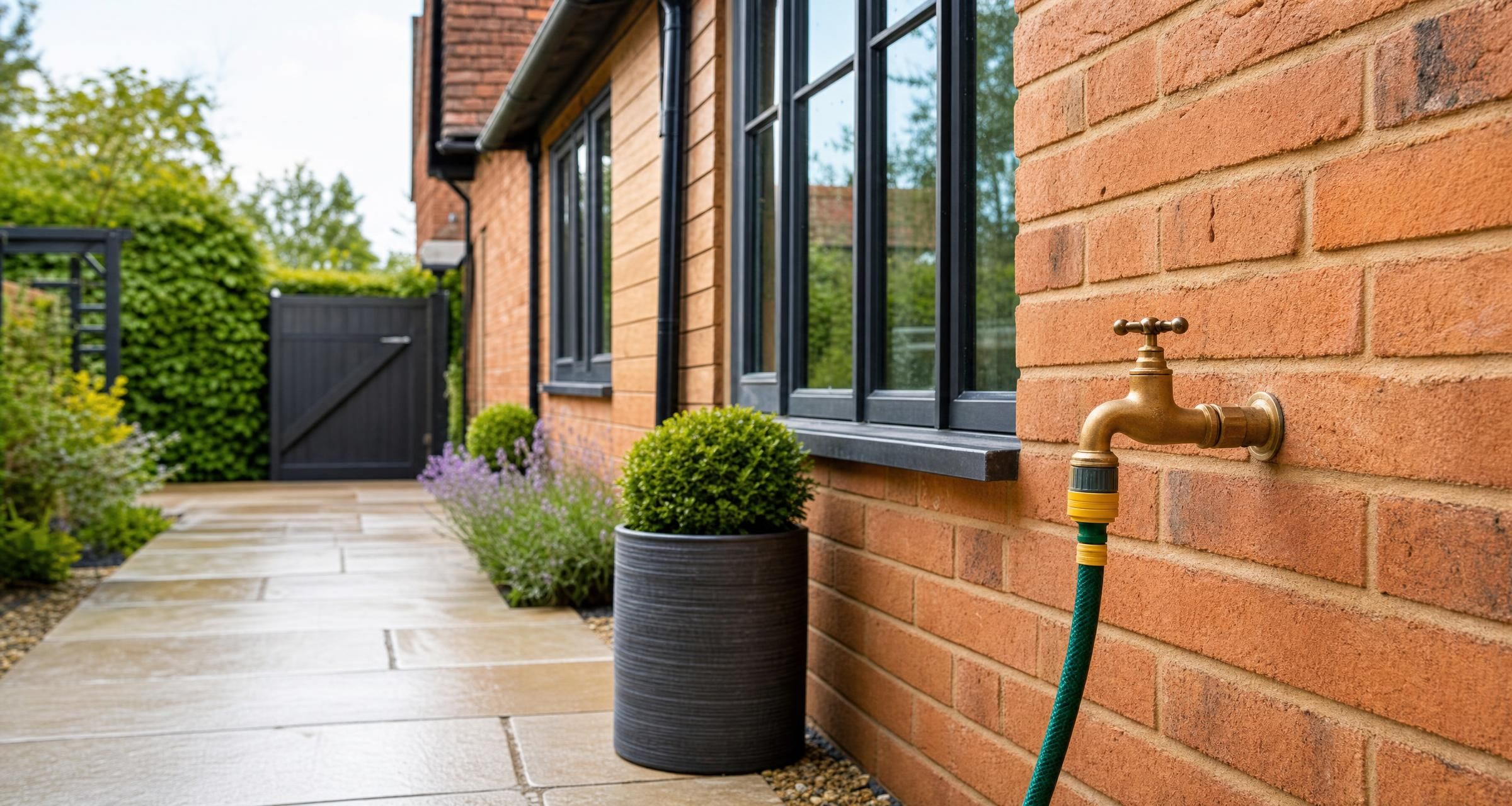
Outside Tap Installation Cost
The typical outside tap installation cost in the UK is between £90 and £250 for a straightforward job, rising to £300 to £600 or more where a new pipe run, wall drilling, access issues or frost protection are needed. Most homeowners want an outdoor tap for washing cars, watering gardens, filling paddling pools, cleaning patios or connecting pressure washers. It is a relatively small plumbing job, but one that still needs the right materials, correct isolation and sensible protection against freezing.
A properly fitted outside tap should be convenient, leak free, easy to isolate and installed in a way that prevents contaminated water from flowing back into the drinking water supply. A plumber will normally fit a double check valve, an internal isolation valve and a suitable external tap, then test the installation before leaving.
For a standard installation on an external wall close to a kitchen sink, utility room or ground floor cloakroom, most plumbers can complete the work in one to two hours. More involved installations can take half a day or longer, particularly where pipework must be routed through cupboards, below suspended floors or around extensions.
Average Outside Tap Installation Cost in the UK
The final price depends less on the tap itself and more on where the plumber can pick up the cold water supply. A tap located directly outside a kitchen sink is usually the most economical option because the incoming pipework is accessible and the external wall is close by.
| Type of work | Typical UK cost | Typical timeframe |
|---|---|---|
| Replace an existing outside tap | £70 to £150 | 30 minutes to 1 hour |
| Basic new outside tap from accessible internal cold pipe | £90 to £180 | 1 to 2 hours |
| New tap including isolation valve and double check valve | £130 to £250 | 2 to 3 hours |
| Tap requiring a longer internal pipe run | £200 to £400 | Half a day |
| Tap fitted through thick stone, brick or rendered wall | £180 to £350 | 2 to 4 hours |
| Frost protected or lockable external tap setup | £180 to £400 | 2 to 4 hours |
| Multiple outdoor taps around a larger property | £300 to £700 plus | Half day to full day |
These figures include typical labour and basic materials, but regional pricing matters. Plumbers in London and parts of the South East often charge more, with hourly rates commonly around £60 to £100. In many other areas, rates of £40 to £70 per hour are more typical. Minimum charges are common, especially for small jobs.
If you need the work done urgently because an existing tap is leaking, frozen or damaged, expect to pay a call out charge. For a clearer idea of how emergency and standard attendance charges are structured, read Plumber Call Out Charges.
What affects the cost of fitting an outside tap?
Distance from the nearest cold water pipe
This is usually the biggest cost factor. The ideal connection point is a cold water pipe under a kitchen sink, in a utility room, downstairs toilet or garage. If the plumber can tee into an accessible pipe just inside the wall, the work is quick.
Costs rise if pipework has to travel through several cupboards, behind fitted units, under floors or across a garage. Longer pipe runs need more materials, more clips and more time. A 5 metre run may add £60 to £150, while a difficult route requiring floorboards to be lifted can add considerably more.
Pipe material and condition
Older homes can contain copper, lead or older plastic plumbing. Modern plumbing is commonly copper or plastic barrier pipe. A competent plumber will assess the existing pipe before making a connection and use compatible fittings.
If the visible cold supply is old, corroded or poorly supported, it may need remedial work before a new branch can be fitted safely. A plumber should not simply connect new fittings to questionable pipework and hope for the best. Homeowners planning other plumbing work may find Plumbing Pipe Types Explained useful for understanding the materials found in UK properties.
Wall construction and drilling access
A standard brick cavity wall is usually straightforward. The plumber will drill from inside to outside, normally with a slight fall towards the exterior so any water within the pipe does not track back into the property. The hole should be neat, suitably sealed and positioned away from electrical cables, gas pipes and obvious drainage routes.
Solid stone walls, very thick walls, tiled internal finishes and rendered walls can take longer. Timber frame properties also need care because the external weather barrier and internal vapour control layers must not be left poorly sealed. If drilling is near a consumer unit, sockets or concealed services, the plumber should use safe working practices and check the proposed route carefully.
Tap type and security
A standard brass bib tap is inexpensive, often £10 to £25 for the tap itself. A lockable tap, tap cover or removable handle can help reduce unauthorised water use. Good quality lockable options may cost £30 to £80 before fitting.
Some homeowners choose a frost protected tap with the shut off point inside the heated part of the house. These products can be useful, but they still need correct installation and should not be treated as invulnerable in prolonged cold weather. In exposed areas, a separate internal isolation valve and drainage arrangement remain sensible.
Access, repairs and making good
Most outside tap installations do not require significant making good. However, if the pipe needs to pass behind kitchen units or tiled splashbacks, access can be the difficult part. Removing and refitting a cupboard, cutting a precise opening in a cabinet or repairing damaged tiles can increase the bill.
Ask before work begins whether the quote includes sealing around the pipe penetration, fitting pipe clips, clearing drilling dust and making any minor internal repairs. A good tradesperson will be clear about what is included.
What should be included in a professional outside tap installation?
A decent installation is more than a tap pushed through a wall. The plumber should provide a controlled branch from the cold water supply and ensure the outlet is suitable for a hose connection.
- An external brass tap fixed securely to the wall.
- A suitable wall plate elbow or backplate fitting.
- Internal pipework in copper or appropriate barrier pipe.
- An accessible internal isolation valve.
- A double check valve to protect the mains water supply.
- Pipe clips at suitable intervals to prevent movement.
- A properly sealed wall penetration.
- Testing for leaks, water flow and correct operation.
- Advice on isolating and draining the tap before freezing weather.
The double check valve is particularly relevant. A hose can be left in a pond, bucket, pressure washer or garden chemical container. If the mains pressure drops, contaminated water could potentially be drawn back towards the wholesome water supply. The Water Supply, Water Fittings Regulations 1999 set legal requirements intended to prevent waste, misuse, undue consumption and contamination of water. Homeowners can review the legislation at Water Supply, Water Fittings Regulations 1999.
In practice, an outside tap used with a hose is normally protected using a suitable double check valve. The exact level of backflow protection depends on the fluid category and intended use. Where hoses may be used with fertiliser, chemicals, animal areas or other higher risk applications, ask the plumber whether additional protection is needed.
The Water Regulations Approval Scheme provides useful information on approved fittings and water regulations compliance. Specifying recognised, suitable fittings is preferable to buying the cheapest unbranded parts online.
Do you need planning permission or building regulations approval?
Installing an outside tap on a typical house does not normally require planning permission. It is generally minor maintenance or improvement work and does not materially alter the building.
There are exceptions. If you live in a listed building, a conservation area, a flat with management restrictions, or a property where the external wall forms part of a leasehold responsibility, check the relevant permissions before drilling. A listed building may require consent if the work affects historic fabric.
Standard domestic outside tap work does not normally need Building Regulations approval. However, the plumbing work must comply with the Water Fittings Regulations applicable in the relevant nation. England and Wales use the Water Supply, Water Fittings Regulations 1999. Scotland and Northern Ireland have their own equivalent requirements.
Any electrical work associated with a pump, powered irrigation controller or external socket is separate. An outdoor socket used for a pressure washer should be suitable for external use and installed by a competent electrician. Electrical work in certain locations may be notifiable under Building Regulations in England. A plumber fitting an outdoor tap should not alter electrical circuits unless qualified to do so.
Outside tap materials cost breakdown
Material prices vary by brand and merchant, but the individual components are not usually expensive. Labour, travel and access are the larger parts of most bills.
| Material | Typical supply cost | Reason for use |
|---|---|---|
| Standard brass outside tap | £10 to £25 | Provides the external water outlet |
| Lockable outside tap | £30 to £80 | Helps prevent unauthorised use |
| Double check valve | £10 to £35 | Helps prevent backflow contamination |
| Isolation valve | £5 to £20 | Allows the outdoor supply to be shut off |
| Wall plate elbow | £5 to £15 | Creates a secure connection through the wall |
| Copper or barrier pipe and fittings | £15 to £60 | Connects the tap to internal cold water supply |
| Pipe insulation and clips | £5 to £25 | Supports and protects pipework |
| Tap cover | £10 to £30 | Offers limited weather protection |
Be wary of quotes that appear unusually cheap but do not mention the check valve or internal isolation. The visible tap may look fine, but the installation could be difficult to isolate, vulnerable to frost or not properly protected against backflow.
Can you fit an outside tap yourself?
A capable homeowner can fit an outside tap, particularly where there is easy access to modern pipework. The practical difficulty is not usually drilling the wall. The harder part is choosing the correct connection point, isolating the water supply, installing the right backflow protection and making reliable joints that do not leak inside a cupboard or wall.
DIY work can be reasonable if you understand your plumbing system, can isolate the water confidently and know how to work with the pipe material present. Before touching any pipework, find and test the main stopcock. If you are not sure where it is or whether it operates, read Mains Water Stopcocks and Isolation Valves Explained for Homeowners.
For many homeowners, using a plumber is the safer option. A small leak on a compression fitting beneath a kitchen sink may go unnoticed for weeks. A poorly installed fitting can damage cabinets, flooring and plasterboard, leaving a repair bill far higher than the saving made on labour.
If you are deciding whether the job is within your ability, When to Call a Professional Plumber vs. DIY explains where professional help is generally worthwhile.
Practical checklist before booking an outside tap installer
- Choose the preferred tap position and check that it is practical for hose access.
- Look inside the nearest room for accessible cold water pipes.
- Check where the internal stopcock is located.
- Tell the plumber if the property has old pipework, a water softener, a combi boiler or a pump.
- Ask whether the quote includes an isolation valve and double check valve.
- Ask whether the tap will be fixed to brick, render, stone, cladding or timber.
- Check whether you want a standard tap, locking tap or frost protected arrangement.
- Make sure the plumber can access the internal pipe route and external wall.
- Ask how the pipe penetration will be sealed against draughts and moisture.
- Confirm whether the price includes materials, parking, VAT and any making good.
Common mistakes to avoid with outside taps
Connecting to a hot water pipe
This sounds obvious, but it happens in utility rooms and under sinks where hot and cold pipes run close together. An outside tap should normally be supplied from the cold mains side. Connecting to hot water can create scalding risk, waste energy and may introduce complications with a stored hot water system.
Leaving out the check valve
Using a hose creates a possible backflow route. Without suitable protection, dirty water can be drawn towards the domestic supply if pressure conditions change. The check valve is a modest cost and should be part of a properly specified installation.
No internal isolation valve
Every outside tap should have a straightforward way to isolate it from indoors. This is essential for maintenance, repairs and winter protection. An isolation valve should be accessible, not buried behind fixed units or hidden under floors with no access hatch.
Failing to protect against freezing
Frozen outside taps and pipes are a common cause of winter leaks. Water expands as it freezes and can split fittings or pipes. The damage is not always obvious until temperatures rise and the thaw begins.
Before cold weather, close the internal isolation valve, open the external tap and allow residual water to drain. If the pipe arrangement does not drain naturally, a plumber can advise on changes. Insulation helps but does not guarantee protection during prolonged freezing conditions.
Using flimsy fittings or poorly supported pipework
An outside tap is often pulled by hoses, pressure washer connections and children filling buckets. If the wall plate is not secured properly, movement can stress joints inside the wall. The pipe should be clipped and the tap should be firmly fixed to a sound surface.
Installing too close to electrical equipment
Do not position the tap where water will regularly spray an external socket, lighting fitting, meter box or consumer unit location. Plan hose routes as well as the tap location. If an external socket is nearby, ensure it is suitable for outdoor conditions and has appropriate protection.
How long does an outside tap take to install?
Most straightforward installations take one to two hours. This assumes there is a suitable cold pipe close to the external wall, the stopcock works, the wall can be drilled easily and no repairs are needed.
Allow two to four hours where the plumber needs to run pipework through a kitchen cabinet, fit additional valves, work around insulation or drill through dense masonry. A more complicated route under floors, through a garage or to a distant garden wall can take half a day.
A professional will usually turn off the water briefly while fitting the tee and isolation valve. The supply may be off for 20 to 60 minutes, depending on the pipe layout and whether the system drains readily. If you have tenants, young children, home working arrangements or a vulnerable person in the house, plan the water interruption around their needs.
Ways to keep the cost of an outside tap down
The best saving comes from choosing a sensible location. Fitting the tap on the wall nearest accessible cold pipework reduces labour and avoids unnecessary disruption. If you want water at the far end of the garden, consider whether a hose reel from a closer tap will do the job before paying for a long buried or exposed pipe run.
Arrange the work alongside other plumbing tasks where possible. If a plumber is already replacing a kitchen tap, fitting a washing machine valve or repairing pipework nearby, adding an outside tap may be more economical because the attendance cost is already covered.
Do not cut costs by omitting the isolation valve or check valve. Those parts are inexpensive compared with repairing a burst pipe or dealing with a water quality issue. Ask for an itemised quote so you can compare what each installer is actually proposing.
FAQ
How much should a plumber charge to fit an outside tap?
For a normal ground floor installation close to an existing cold water pipe, expect around £90 to £180. A more complete installation with a new internal isolation valve, double check valve and modest pipe run is commonly £130 to £250. Difficult access, long pipework routes, thick walls and London labour rates can push the total higher.
Does an outside tap need a check valve?
In most domestic situations, yes. A hose connected to an outdoor tap can create a backflow risk, particularly if it is placed in a bucket, pond, drain or chemical solution. A suitable double check valve is commonly fitted to protect the wholesome water supply. The plumber should assess the intended use and select protection that meets the relevant water regulations.
Can an outside tap freeze in winter?
Yes. Any water left in exposed external pipework can freeze in severe conditions. The safest routine is to isolate the outdoor supply from inside, open the external tap and drain residual water before hard frost arrives. A tap cover and pipe insulation can help, but neither replaces proper isolation and draining.
Can I connect an outside tap to a kitchen cold pipe?
Usually, yes. The cold pipe beneath a kitchen sink is often the most practical source, provided it is a suitable mains fed supply and the plumber can access it safely. The new branch should include an internal isolation valve and appropriate backflow protection. The plumber will also check that connecting the tap will not affect existing appliances, filters or water softeners.
Will fitting an outside tap reduce water pressure indoors?
A correctly sized outside tap installation should not noticeably reduce indoor pressure when the tap is off. If a hose, sprinkler or pressure washer is running, it can reduce flow available elsewhere because both outlets are drawing from the same supply. Properties with already poor flow, shared supplies or old restrictive pipework may benefit from an assessment before adding high demand garden equipment.
Final Thoughts
An outside tap is a useful, affordable improvement, provided it is connected to the correct cold water supply and includes the valves needed for safe operation and winter maintenance. For most homes, budgeting £130 to £250 for a professionally installed tap is realistic. Spend a little more where access is difficult or frost protection is needed, rather than accepting shortcuts hidden inside the property.
To compare realistic local prices and find a trusted professional for the work, post a job on BookaBuilderUK to get free quotes from vetted local tradespeople.


