
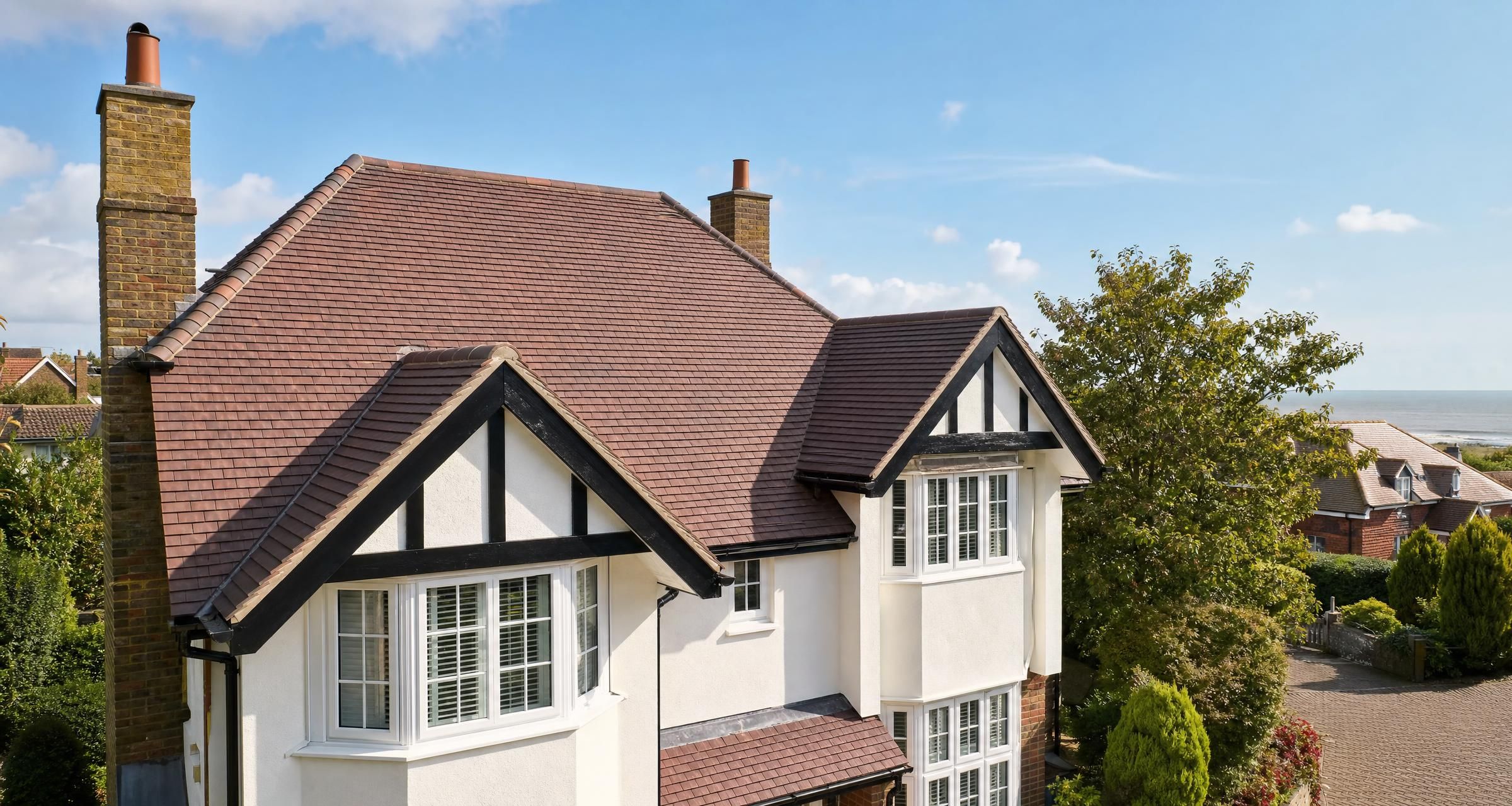
Roofers in Frinton-on-Sea
Finding reliable Roofers in Frinton-on-Sea is about more than replacing a few slipped tiles. Your roof is a working system of coverings, battens, underlay, flashings, gutters, ventilation and structural timbers. A sound repair needs to identify where water is getting in, why that weakness developed and whether the surrounding roof details are likely to fail next.
Homes in coastal locations can face persistent wind, driving rain and salt laden air. These conditions can accelerate corrosion in metal fixings, wear down mortar bedding and expose weaknesses around ridges, valleys, chimney stacks and roof edges. The right roofer will assess the whole roof rather than focusing only on the most obvious broken tile.
This guide explains the common roofing jobs homeowners may need, realistic costs, the questions to ask before appointing a contractor, the permissions that may apply and the warning signs that should not be ignored.
What Roofers in Frinton-on-Sea can help with
A competent roofing contractor should be able to diagnose faults and carry out both small repairs and larger replacement projects. The scope of work varies significantly, so it helps to understand what is normally involved before requesting estimates.
Roof repairs
Most roofs do not need full replacement because of one leak. Local repairs can be effective where the covering is generally sound and the issue is confined to a particular detail. Typical repair work includes replacing cracked or slipped tiles, renewing damaged slates, repairing lead flashings, rebedding ridge tiles and resolving leaks around valleys or roof windows.
A roofer should inspect the surrounding area closely. For example, several loose tiles can indicate failed nail fixings, decayed battens or wind lift rather than isolated tile damage. Replacing the visible tiles without examining the cause may lead to a repeat visit after the next spell of bad weather.
Ridge, hip and verge repairs
Ridge tiles run along the top of a pitched roof. Hip tiles cover the angled junctions where roof slopes meet. Verge tiles form the exposed roof edge at a gable. These areas are vulnerable because they sit at roof perimeters and are exposed to wind uplift.
Older roofs commonly have ridge and hip tiles bedded in mortar. Mortar can crack, loosen or detach over time. Depending on the roof construction and tile manufacturer guidance, a dry fix system using mechanical fixings may be suitable. A proper repair should consider the condition of the supporting battens, underlay and fixings beneath the visible tiles.
Leadwork and flashing repairs
Lead flashings are found around chimneys, roof abutments, dormers, roof windows and valleys. They direct water away from vulnerable junctions. Poorly detailed flashing is one of the most frequent causes of recurring leaks.
Leadwork should be properly dressed, fixed and allowed to move with temperature changes. Large sheets require appropriate joints to accommodate expansion. Smearing sealant over split lead or loose mortar is rarely a durable repair. Sealant has a place for limited temporary work, but it is not a substitute for correctly installed flashing.
Chimney repairs
Roofers often carry out chimney pointing, flaunching repairs, flashing renewal and replacement of damaged chimney pots. Chimneys should be checked for loose brickwork, failed mortar joints and defective lead soakers as well as problems at the top.
If a chimney is no longer used, it can be removed or reduced in height, but this needs careful consideration. Removing a stack affects roof structure, weathering and the appearance of the property. It may also need planning consideration in certain circumstances and should not be treated as a simple demolition job.
Flat roof repairs and replacement
Flat roofs are found on garages, extensions, porches, bay windows and dormers. Common materials include felt systems, GRP fibreglass, EPDM rubber and single ply membranes. Each has different installation requirements, drainage needs and detailing methods.
Ponding water, splits, lifted edges, cracked coverings and failed upstands are all signs that a flat roof deserves attention. A roofer should establish whether the deck beneath remains sound. Applying a new membrane over wet or rotten decking can hide the problem briefly while allowing timber damage to continue.
Full reroofing
A full reroof usually involves removing existing tiles or slates, checking the roof structure, replacing defective battens, fitting suitable underlay, renewing flashings and installing new roof coverings. It may also include insulation improvements, verge systems, ridge systems, gutters and fascias.
Reroofing is disruptive, but it gives the contractor access to details that cannot be properly assessed from ground level. It is the opportunity to correct poor ventilation, defective underlay and inappropriate previous repairs.
For a closer look at the materials available, read Roof Tile Types Explained Clay Concrete Slate and Composite Options for Homeowners. Tile weight, profile, fixing method and compatibility with the existing roof all matter.
Warning signs that your roof needs professional attention
A roof leak is not always visible directly below its source. Water can travel along battens, underlay, rafters or ceiling joists before appearing on an internal ceiling. Do not assume that the stain marks the point where water entered.
- Slipped, cracked, missing or visibly loose tiles and slates
- Water staining, mould or damp patches on ceilings or in the loft
- Daylight visible through the roof from inside the loft
- Loose mortar around ridge, hip or verge tiles
- Damaged, lifted or split lead flashing
- Gutters overflowing during normal rainfall
- Broken gutter brackets, leaking joints or downpipes discharging near walls
- Sagging roof lines or visible dips in the roof covering
- Rotten fascias, soffits or exposed timber at the eaves
- Granules, mortar fragments or tile pieces collecting in gutters or on paths
A sagging roof line, widespread tile movement or a bulging chimney stack should be treated as urgent. Keep people away from the affected area and arrange a professional inspection. Do not climb onto the roof or attempt to secure loose materials yourself.
How a proper roof inspection should be carried out
Many roof faults can be identified from ground level, within the loft and from safe access such as scaffolding or a roof ladder. A visual inspection from the pavement alone is not enough to justify a large reroof quotation.
A thorough survey normally considers the following:
- The age, condition and type of roof covering
- Tile or slate fixings, including signs of corrosion or wind lift
- The condition of ridges, hips, valleys, verges and flashings
- Whether gutters are correctly aligned and discharging effectively
- The condition of fascias, soffits and eaves details
- The underlay and battens where visible from the loft
- Signs of condensation, inadequate ventilation or insulation defects
- Rafter condition, roof spread, woodworm evidence and previous alterations
- Chimney condition and leadwork around abutments
Ask the roofer to explain their findings in plain language. Photographs are useful, especially for high level work, but they should support a clear written scope rather than replace one. A contractor should be able to distinguish between essential repairs, sensible preventative work and optional improvements.
Regular maintenance helps prevent minor defects becoming expensive ones. This article on Expert Tips on Maintaining Your Roof and Gutters covers the routine checks that homeowners can arrange safely from ground level.
Choosing a roofer: practical checks before work starts
Roofing has a low barrier to entry, and homeowners are often approached after storms by people offering immediate repairs. Some are legitimate contractors, but others rely on pressure, alarming claims and cash only requests. Take time to check who you are dealing with unless there is an immediate risk to safety.
Ask about relevant experience
Roofing is not one single skill. A contractor experienced in concrete tiled pitched roofs may not be the best choice for a heritage slate roof, complex leadwork or a large GRP flat roof. Ask for examples of similar work, including the roof material and type of repair required.
For older or natural slate roofs, ask how replacement slates will be matched, whether the roof has nail fatigue and how the contractor will avoid damaging sound existing slates. For flat roofs, ask which system they propose, whether they are approved by the product manufacturer and what warranty is available.
Check insurance and business details
Ask to see current public liability insurance. Employers liability insurance may also be required where the contractor employs staff. Insurance does not prove workmanship quality, but it is a basic safeguard.
Request the business name, address, telephone number and company registration details where applicable. Check the information independently. Be wary of a contractor who will only communicate through a temporary mobile number or will not provide written details.
Ask about access and safety
Roof work involves serious fall risks. The Health and Safety Executive guidance on work at height makes clear that work should be properly planned, supervised and carried out by competent people.
For anything beyond a very minor repair, scaffolding is often the safest access method. It also allows better workmanship because materials can be handled securely and roof edges can be protected. A contractor who dismisses the need for safe access simply to make their price appear lower may be creating unnecessary risk.
Get the proposed materials in writing
A quote should identify the key materials. “Replace roof tiles as required” is too vague for substantial work. It should state the tile or slate type, underlay, battens, flashings, ridge system, guttering and insulation where relevant.
Roof battens should be suitable for the roof covering and properly graded. Battens are structural fixing components, not merely timber strips. Tile spacing, fixing pattern and nail specification need to follow the tile manufacturer instructions and the exposure of the site.
Mechanical tile fixings are particularly relevant where roofs are exposed to strong winds. For more detail, see Roof Tile Fixings Explained Clips Nails and Best Practice for Windy Areas.
What to include when requesting roofing quotes
Better information produces more comparable quotes. Provide clear photographs from ground level if safe, the approximate age of the roof, whether there is an active leak and where water appears internally. Tell contractors about access restrictions, shared driveways, conservatories, power lines, parking limitations and any previous repairs.
For larger work, ask each contractor to quote against the same written brief. If one roofer has inspected the property and identified a detailed scope, you can use that information to ask others to price equivalent work. Do not expect a contractor to guarantee a final price without inspecting the roof.
Items a roofing quotation should cover
- Clear description of the work and roof areas included
- Type, make or specification of main materials
- Whether existing coverings will be stripped or overlaid
- Allowance for replacement battens, underlay and timber repairs
- Details of leadwork, valleys, verges, ridges and abutments
- Scaffolding, edge protection and access arrangements
- Waste removal and whether a skip is included
- Protection for gardens, paths, vehicles and neighbouring property
- Estimated start date and expected duration
- Payment schedule, VAT position and warranty terms
- How hidden defects and extra work will be handled
Hidden defects are common in roofing. Rotten battens, perished underlay and decayed timber may only be visible once coverings are removed. A good quote will explain the rate or method for dealing with genuine additional work and require your agreement before that work proceeds.
Typical roofing costs in 2026
Roofing prices vary with roof size, pitch, access, material choice, number of chimneys and complexity of detailing. Coastal weather exposure can also affect the chosen fixing specification and the level of maintenance needed. The figures below are broad UK working ranges for planning purposes. Obtain site specific written quotes before committing.
| Type of work | Typical price range | Likely timeframe |
|---|---|---|
| Replace one or two slipped or broken tiles | £150 to £350 | One to three hours, subject to access |
| Local tile or slate repair with safe access | £350 to £1,200 | Half a day to two days |
| Rebed or renew a short ridge section | £500 to £1,500 | One to two days |
| Renew chimney flashing | £700 to £2,000 | One to three days |
| Small flat roof replacement | £1,200 to £3,500 | One to three days |
| Scaffolding for a typical two storey property | £900 to £2,500 | Usually erected before work begins |
| Reroof a typical three bedroom house using concrete tiles | £8,000 to £16,000 | One to three weeks |
| Reroof using natural slate or complex detailing | £15,000 to £35,000 or more | Two to five weeks |
Small repair prices can appear high compared with the value of a few replacement tiles because access, labour, insurance, travel and safe working arrangements make up much of the cost. A £5 tile cannot necessarily be fitted safely for £5.
A full reroof can vary widely. The roof shape, tile type, valley length, leadwork, scaffold design, chimney work and condition of the substrate all change the final figure. For a detailed explanation of typical replacement costs, see How Much Does It Cost to Replace a Roof in the UK in 2026? Materials, Labour and Scaffolding Explained.
How to compare roofing quotes fairly
The cheapest figure is not automatically the best value. A lower price may exclude scaffolding, waste removal, leadwork, underlay replacement or VAT. It may also assume that only the visible defect will be addressed.
Compare each quote line by line. Check whether both contractors are proposing the same roofing material, the same stripping method and the same detail around ridges, valleys and chimneys. A quote for a new tile covering over old underlay and battens is not equivalent to a full reroof.
Ask direct questions where wording is unclear:
- Will the old roof covering be removed completely?
- Are new battens and breathable underlay included?
- How will the roof be ventilated?
- Are valleys renewed or retained?
- Is leadwork included, and what code of lead is proposed?
- Are ridge and hip tiles mechanically fixed where appropriate?
- Does the price include scaffolding, waste disposal and making good?
- What workmanship guarantee is offered in writing?
Never pay the full contract sum before work starts. A reasonable deposit may be requested for ordered materials, particularly for specialist tiles or slate. Stage payments should reflect measurable progress, such as completion of stripping, completion of weatherproofing and final completion after inspection.
Planning permission and building regulations for roofing work
Most straightforward repairs and like for like roof covering replacements do not require planning permission. There are exceptions, including listed buildings, properties in designated areas and work that materially changes the appearance of the roof. Replacing a traditional covering with a substantially different material can require further checks.
The safest starting point is the Planning Portal guidance for roof work. If your home is listed or the proposal changes roof height, shape, materials or appearance, seek advice before work begins.
Building Regulations can apply to roofing work, particularly where structural alterations are involved or a thermal element is renovated. If more than 25 per cent of a roof area is renovated, there may be a requirement to improve insulation to a reasonable standard where technically and financially feasible. This needs to be considered alongside ventilation, headroom and moisture control.
Replacing roof coverings can reveal structural issues. New materials should not overload an existing roof. Concrete tiles are often heavier than some alternatives, while natural slate has its own weight and fixing requirements. A professional roofer should not recommend changing material without considering the roof structure.
Building control involvement may be needed for structural changes, changes that affect fire safety or substantial thermal upgrades. Your contractor can advise, but the homeowner remains responsible for ensuring approvals are in place. Keep certificates, invoices, specifications and photographs with your property records.
Common roofing mistakes that cost homeowners more
Accepting a diagnosis without an inspection
A contractor who says a whole roof must be replaced after looking from the ground may be right, but the claim should be supported by a proper inspection. Equally, a contractor offering a cheap patch without checking the roof from inside or at close range may miss the underlying defect.
Covering over existing problems
Overlaying a new flat roof covering over wet insulation, rotten decking or trapped moisture can shorten the lifespan of the new installation. On pitched roofs, laying new tiles over failed battens or degraded underlay simply conceals problems.
Using mortar as the only answer
Mortar is still appropriate for certain details, but it must be properly mixed, applied and protected while curing. Repeatedly patching failing mortar on exposed ridges without checking the underlying system can become a cycle of short term repairs.
Ignoring gutters and drainage
Blocked gutters can force water behind fascias, saturate walls and make a roof leak appear worse than it is. Check that downpipes discharge into suitable drainage and that gutter falls direct water towards outlets. A roof repair is less effective if rainwater management is neglected.
Choosing unsuitable materials
Tiles, slates, underlay, battens and fixings need to work together. Mixing incompatible materials can cause premature failure. For example, incorrect metal fixings can corrode, while unsuitable replacement tiles can alter water flow and fail to interlock correctly with the original covering.
Proceeding without a written scope
Verbal agreements create disputes. Even for modest repairs, obtain a written description of the work, total price, payment terms and warranty. Photograph the roof before work starts where possible, especially if access equipment will cross gardens or driveways.
A practical checklist before appointing a roofer
- Describe the problem clearly and take safe ground level photographs.
- Arrange inspections from at least two suitable contractors for significant work.
- Ask each contractor to provide a written scope and price.
- Check public liability insurance and relevant experience with your roof type.
- Confirm whether scaffolding, waste disposal and VAT are included.
- Ask how concealed timber or underlay defects will be priced and approved.
- Check whether planning permission or building control approval may be needed.
- Agree a payment schedule linked to progress, not arbitrary dates.
- Keep copies of quotations, invoices, warranties and any certificates.
- Inspect completed work from safe positions and ask for photographs of high level details.
Frequently asked questions about Roofers in Frinton-on-Sea
How much should Roofers in Frinton-on-Sea charge to fix a leaking roof?
For a small, accessible repair, homeowners commonly pay between £150 and £500. Where scaffolding is needed, flashing has failed, several tiles need replacement or the source of the leak is difficult to trace, costs often rise to £700 to £2,000 or more.
The cause matters more than the visible symptom. A loose tile may be a simple repair, while a damp patch caused by failed valley lining, chimney flashing or deteriorated underlay may involve more extensive work. Ask for the likely source of the leak, the proposed repair and any limitations in writing.
Do I need scaffolding for roof repairs?
Not always. A very minor repair may be completed safely using appropriate roof access equipment. However, scaffolding is usually the right choice for larger repairs, chimney work, gutter replacement, full reroofing or any job involving extended work at height.
Scaffolding adds cost, but it improves safety, allows materials to be handled properly and gives the roofer secure access to do a better job. If a contractor proposes significant roof work without adequate safe access, ask how they will meet work at height requirements.
Can a roofer replace tiles without replacing the whole roof?
Yes, provided the rest of the roof is in reasonable condition and matching replacement tiles or slates are available. Localised tile replacement is a normal repair. The roofer should check the battens, underlay and fixings beneath the affected area before confirming that only tiles need changing.
A full reroof becomes more likely where tiles are broadly failing, nails are corroding, underlay has deteriorated, battens are decayed or repairs are becoming frequent across several roof slopes.
How long should a new roof last?
A well installed roof covering can last several decades, but lifespan depends on materials, installation quality, exposure, maintenance and the condition of details such as leadwork and gutters. Natural slate can last much longer than many tile systems, while some flat roof systems have shorter expected service lives but can still perform well if correctly installed and maintained.
The roof covering is only part of the system. A new tile roof with poor flashings, unsuitable battens or inadequate ventilation may develop problems far earlier than expected.
Should I repair or replace an old roof?
Repair is usually sensible where the fault is local, the roof structure remains sound and the covering has useful life left. Replacement is more economical where there are widespread defects, repeated leaks, failing underlay, extensive nail fatigue or significant deterioration in several roof areas.
Ask for an honest assessment of both options. A good roofer should explain the likely remaining life of the existing roof, the cost of essential repairs now and the risks of postponing replacement.
Final Thoughts
Roofing work is easiest to manage when the fault has been properly diagnosed, the scope is written down and safe access is included from the outset. Do not let a small leak become a damaged ceiling, rotten timber problem or major insurance claim. Deal with defects promptly, maintain gutters and retain records of completed work.
If you need repair work, a roof inspection or a complete replacement, post a job on BookaBuilderUK to receive free quotes from vetted local tradespeople.


