
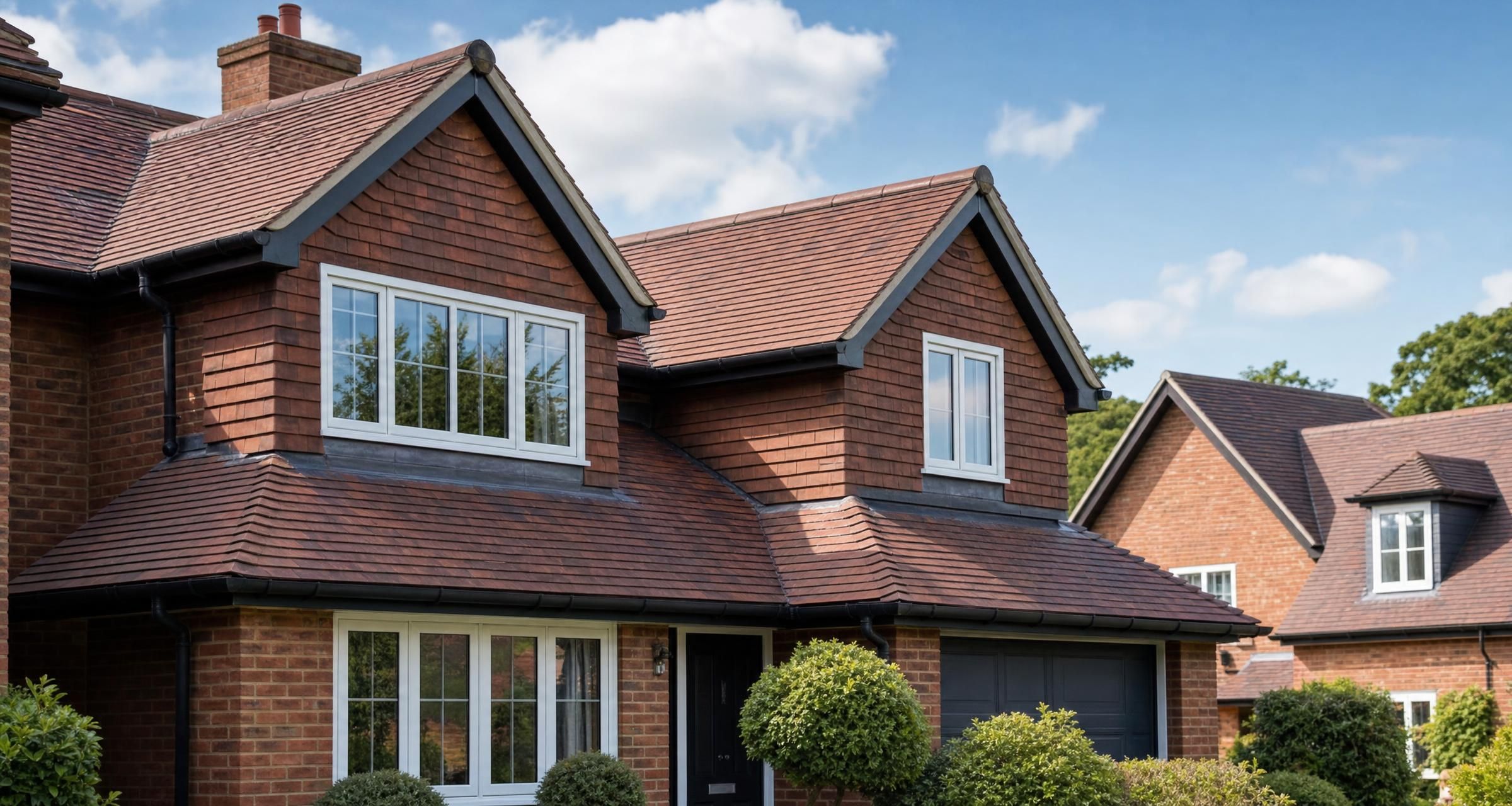
Roofers in Laindon
Finding reliable Roofers in Laindon is about more than getting a quick price for a slipped tile or a leaking ceiling. Your roof is a working system made up of coverings, battens, underlay, flashings, gutters, ventilation and supporting timbers. A fault in one part can allow water into another, and a repair that looks straightforward from ground level may need a far more careful investigation once the roof covering is opened up.
Whether you need a minor repair, flat roof renewal, chimney flashing work or a full reroof, the best result starts with an accurate diagnosis and a detailed written scope. This guide explains what roofers can help with, realistic 2026 costs, how to compare quotations, what regulations may apply and the warning signs that should not be ignored.
What work can a roofing contractor carry out?
A competent roofer should be able to assess the whole roof rather than simply replace the first tile they see. Water can travel along battens, felt or timbers before appearing inside the house, so the visible stain in a bedroom ceiling is not always directly below the defect.
Common pitched roof repairs
Pitched roof work often includes replacing cracked, slipped or missing tiles and slates, renewing ridge and hip tiles, repairing verge mortar, fitting dry verge systems, renewing valleys and repairing leadwork around chimneys, dormers and roof junctions.
Roofers may also deal with failed underlay, damaged battens, bird entry points, broken eaves trays and worn roof ventilation. Older roofs sometimes have fragile felt that has split or perished. In that situation, replacing a handful of tiles may stop an immediate leak, but it will not necessarily resolve water penetration driven by wind.
Flat roof repairs and replacement
Flat roofs are commonly found on garages, extensions, porches, dormers and bays. Typical materials include mineral felt, GRP fibreglass, EPDM rubber and liquid applied systems. Each has different detailing requirements around outlets, edges, walls and rooflights.
A small flat roof can fail because water is ponding around an outlet, because the flashing has lifted, or because the material has cracked at a joint. A roofer should establish whether a local repair is sensible or whether the roof has reached the end of its serviceable life.
Gutters, fascias and soffits
Gutters and roofline components are not purely cosmetic. A blocked gutter can overflow into the eaves, saturate brickwork and encourage rot in fascia boards and rafter ends. Poorly installed replacement fascias can also cover ventilation paths that the roof needs to control condensation.
Regular cleaning and inspection is cheaper than repairing damage caused by repeated overflow. For practical seasonal checks, see Expert Tips on Maintaining Your Roof and Gutters.
Chimney, valley and flashing work
Lead flashings are among the most common sources of leaks on otherwise sound roofs. Problems include split lead, failed mortar pointing, poorly dressed lead, short laps, loose soakers and unsuitable sealant repairs. Lead needs room to expand and contract with temperature changes. A rigid patch can fail quickly.
Valleys also need close attention. Tile valleys, lead valleys and fibreglass valleys must direct water cleanly into the gutters without obstruction from debris, broken tiles or mortar. Work around these details requires experience because mistakes can create hidden leaks that only appear during sustained rain.
Homeowners considering leadwork can read Lead Flashing Repair Explained for Homeowners Common Failures Best Fixes and When Replacement Is Needed before agreeing to a patch repair or replacement.
Choosing Roofers in Laindon for the right job
A good roofer will not promise a permanent answer from a photograph alone. Photos can be useful for an initial discussion, but a proper quotation for anything beyond a simple visible repair usually requires a site inspection. The contractor should inspect the roof externally, assess the loft where safe and accessible, and consider the condition of the roof structure as well as the outer covering.
Be cautious of anyone who says a roof needs replacing immediately without explaining why, especially if they have approached you without being asked. Equally, be wary of a contractor who offers to solve an active leak with a large amount of mastic but cannot explain the source of the failure.
Checks to make before appointing a roofer
- Ask for the contractor's full business name, address, contact details and evidence of public liability insurance.
- Request examples of comparable work, particularly for flat roof systems, slate roofs, leadwork or full reroofs.
- Check that the quotation identifies the materials, roof areas and details to be renewed.
- Ask who will carry out the work and whether any element will be subcontracted.
- Confirm the proposed start date, expected duration, scaffold arrangements and waste removal method.
- Establish what workmanship guarantee is offered, how long it lasts and exactly what it covers.
- For substantial work, ask whether the roofer is registered with a competent person scheme or whether Building Control approval will be needed.
- Never pay the full contract sum before materials are delivered and work is satisfactorily completed.
Membership of a trade body can be useful, but it is not a substitute for checking the scope, evidence of insurance and quality of previous work. The National Federation of Roofing Contractors provides useful information on professional roofing standards and finding appropriate specialists.
Questions worth asking during the survey
Ask the roofer to explain what has failed, what evidence supports that view and whether the proposed repair addresses the cause rather than just the symptom. A contractor who can point out a cracked valley, open flashing joint or failed underlay section is giving you something that can be assessed.
For a reroof, ask whether the quote includes stripping the existing roof, replacing rotten timber where necessary, new breathable membrane, treated battens, ventilation, eaves protection, flashings, ridge system, disposal and making good. These items make a major difference to the final price and lifespan of the job.
How a proper roof inspection should work
A roof survey should start from ground level, but should not end there. Binoculars can identify obvious issues such as missing tiles, uneven ridge lines, damaged gutters and vegetation in valleys. Closer inspection may be needed to confirm the condition of tiles, mortar, leadwork and roof junctions.
Internally, the roofer should look for daylight through the roof covering, staining to rafters, damp insulation, mould, water marks around chimney breasts and sagging or split timbers. Loft insulation can hide evidence, so it should not be assumed that a dry looking loft hatch area means the roof is sound.
Where access is unsafe, a roofer may use scaffold, a roof ladder or a camera pole. Work at height is one of the most hazardous activities in construction. Anyone working on your property should plan access properly and use suitable edge protection. The Health and Safety Executive guidance on work at height explains the duty to plan work, use suitable equipment and prevent falls.
For an active leak, a temporary repair may be needed to limit water damage before permanent work can be scheduled. The written quote should make clear whether that temporary measure is included, what it is expected to achieve and whether further work is likely once the roof is opened up.
Typical roofing costs for UK homeowners in 2026
Roofing prices vary with access, roof height, covering type, pitch, weather exposure, waste volume and the number of details such as chimneys, valleys, dormers and rooflights. Labour costs can also increase where work is urgent or where scaffolding must be erected quickly.
The figures below are realistic broad guide prices for labour and materials. They are not fixed prices, and a proper survey is the only reliable way to cost an individual roof.
| Type of work | Typical 2026 price range | Typical timeframe |
|---|---|---|
| Replace one or two accessible tiles | £180 to £350 | Half a day |
| Small repair to slipped tiles or slate section | £350 to £850 | Half a day to one day |
| Repair chimney flashing or lead soakers | £500 to £1,500 | One to two days |
| Renew ridge tiles using a dry fix system | £900 to £2,500 | One to three days |
| Replace guttering, fascias and soffits on a typical house | £1,500 to £4,000 | Two to five days |
| Small flat roof replacement | £1,200 to £3,500 | One to three days |
| Garage flat roof replacement | £2,000 to £5,500 | Two to five days |
| Full reroof of a typical three bedroom house | £8,000 to £18,000 | One to three weeks |
| Natural slate reroof | £15,000 to £35,000 or more | Two to five weeks |
| Scaffolding for roofing work | £900 to £3,500 or more | Usually hired for the project duration |
Small repairs can appear expensive relative to the amount of material used because access, travel, diagnosis and safe working still need to be paid for. A single broken tile may cost only a few pounds, but reaching it safely on a steep roof can take several hours and may require access equipment.
A full reroof can range widely because a basic concrete tile roof is very different from a complex slate roof with several valleys, a chimney, dormers and difficult access. For a more detailed breakdown of materials, labour and scaffold costs, see How Much Does It Cost to Replace a Roof in the UK in 2026? Materials, Labour and Scaffolding Explained.
Factors that increase the final price
- Restricted access for scaffold delivery, skips and materials handling.
- Steep roof pitches or high roof levels requiring additional safety measures.
- Hidden decay to battens, rafters, fascia boards or chimney timbers.
- More complex details such as valleys, dormers, rooflights and solar panels.
- Natural slate, handmade clay tiles or matching specialist materials.
- Asbestos containing materials requiring a specialist survey and controlled removal.
- Urgent work following storm damage or a serious leak.
- Extra insulation, ventilation or structural work required to meet Building Regulations.
Comparing roofing quotes fairly
Do not compare roofing quotes solely by the final total. A lower quote may omit scaffold, waste disposal, new membrane, replacement battens, lead flashings or the cost of repairing decayed timber. Those omissions can turn an apparently cheap quote into an expensive project once the work begins.
Ask each contractor to quote against the same outline scope where possible. If one roofer proposes a repair and another proposes a full replacement, ask each to explain the expected lifespan, risk and likely future maintenance. A repair can be the right choice, but only where the remaining roof is in reasonable condition.
What a detailed roofing quotation should include
- The precise roof area or elements included in the work.
- The existing materials to be removed, retained or repaired.
- The proposed roofing material, manufacturer where relevant and colour or finish.
- Whether new underlay, battens, eaves trays and ventilation will be installed.
- Details for valleys, ridges, verges, flashings, chimney work and gutter connections.
- Scaffold cost, duration and any access restrictions.
- Skip hire, waste removal and site cleaning.
- Allowances for timber repairs and how variations will be approved.
- VAT treatment, payment stages and the contractor's guarantee.
- An estimated start date and expected duration, subject to suitable weather.
For tile and slate projects, it is sensible to ask what replacement material will be used and whether it will match as closely as practical. Different tile profiles may not interlock correctly, even if they appear similar from the ground. The differences between common materials are covered in Roof Tile Types Explained Clay Concrete Slate and Composite Options for Homeowners.
Roof materials and why the detail matters
Concrete tiles are widely used, durable and generally cost effective. They are heavier than some alternatives, so roof structure must be suitable. Clay tiles can offer a distinctive appearance and long service life, but matching older tiles may be more difficult and can cost more. Natural slate is highly durable when correctly laid, though it requires appropriate fixing, skilled workmanship and suitable roof support.
Composite tiles can provide a lighter alternative in some situations. They vary considerably in quality and appearance, so homeowners should ask to see a sample and confirm the manufacturer's installation requirements. A material warranty is only valuable if the roof has been installed in accordance with that system.
The covering itself is only one layer. Underlay, battens and fixings matter just as much. For pitched roof work, contractors should understand the requirements of BS 5534 for slating and tiling. Wind uplift is a real consideration, and tiles must be fixed correctly rather than relying solely on their weight.
Planning permission and Building Regulations for roofing work
Many repairs and like for like replacements do not need planning permission. Replacing roof tiles, renewing a flat roof covering or repairing flashing will often fall within normal maintenance. However, changing the roof shape, raising the ridge, adding a dormer, installing rooflights in sensitive locations, working on a listed building or living in a designated area can change the position.
Planning rules depend on the work and the property. If your proposal alters the roof form or appearance, check the Government planning permission guidance before instructing a contractor. A roofer can advise on the practical roofing implications, but the property owner remains responsible for obtaining any required consent.
Building Regulations and thermal upgrades
Building Regulations may apply where a substantial part of the roof is being replaced or renovated. In broad terms, if more than 25 per cent of a thermal element is renovated or replaced, improvements to insulation may be required where technically and financially feasible.
That can affect the depth of insulation, roof ventilation and detailing around eaves, rooflights and abutments. Adding insulation without managing ventilation can cause condensation and timber decay. Conversely, installing a breathable membrane does not automatically remove the need for appropriate ventilation. The roof design must work as a whole.
Structural work, such as replacing rafters, strengthening a roof for heavier tiles or altering trusses, also requires proper assessment. Do not allow a contractor to remove structural members casually to create storage space or improve access. Roof trusses rely on each part of the system to remain stable.
Common roofing mistakes that cost homeowners money
Delaying a small leak
A minor water mark can be the first sign of a larger problem. Repeated wetting can rot battens and timbers, damage insulation, stain ceilings and create mould. Address leaks promptly, particularly around chimneys, valleys and rooflights.
Accepting a vague estimate
A text saying “repair roof £1,500” gives little protection if there is a dispute. You need to know what will be repaired, which materials are included, whether scaffold is included and what happens if additional defects are found.
Using sealant as the main repair method
Roofing sealants have legitimate uses, but they are not a universal answer. Failed leadwork, cracked tiles, loose mortar or defective joints should usually be repaired using the correct roofing detail. Large areas of mastic can hide faults and make later repairs harder.
Ignoring drainage
A roof cannot perform properly if rainwater has nowhere to go. Gutters should have suitable falls, outlets should be clear and downpipes should discharge correctly. Flat roof outlets deserve particular attention because ponding water shortens the life of many systems.
Focusing only on the outer finish
A smart new tile covering is not enough if the battens are poor, ventilation is blocked or flashing details are wrong. Ask about the unseen parts of the roof, because these are often where workmanship has the greatest effect on durability.
What to do if your roof is leaking now
First, protect people and property. Move valuables away from the affected area, place containers beneath drips and take photographs of visible damage for your records or insurer. If water is close to electrical fittings, switch off the affected circuit only if it is safe to do so and seek advice from a qualified electrician.
Do not climb onto a wet roof, attempt to lift tiles from a ladder or put weight on a damaged ceiling. If the ceiling is bulging with trapped water, keep clear of the area because it may collapse unexpectedly.
Contact a roofer and explain when the leak occurs. Is it only during wind driven rain, after prolonged rainfall, when snow melts, or whenever gutters overflow? That information helps identify likely causes. Ask for a temporary weatherproofing measure where needed, followed by a written recommendation for permanent repair.
A practical checklist before booking roofing work
- Take clear photographs from ground level and inside the loft where safe.
- Write down when the issue started and the weather conditions that trigger it.
- Check gutters and downpipes for obvious blockage without putting yourself at risk.
- Arrange at least two detailed inspections for anything beyond a small visible repair.
- Ask each roofer for a written scope, materials list, cost and timescale.
- Confirm scaffold, waste removal, insurance and guarantee details before work begins.
- Agree how unforeseen timber repairs or other variations will be priced and approved.
- Keep copies of the quotation, invoice, photographs and any warranty documents.
- Inspect completed work from ground level and ask for photos of inaccessible details.
- Make final payment only after the agreed work has been completed and the site left safe and tidy.
Frequently asked questions about Roofers in Laindon
How much do Roofers in Laindon charge for a roof repair?
For a straightforward repair involving a few accessible tiles, homeowners may pay around £180 to £350. More involved repairs, such as localised tile replacement, minor valley repairs or work requiring roof access equipment, can range from £350 to £850. Chimney flashing and leadwork often cost £500 to £1,500 because the details are skilled and access can be more demanding.
The key issue is not the number of tiles being changed but the cause of the leak, the height of the roof and whether scaffold is required. Request a written scope so you can see whether access, materials, waste and VAT are included.
Do I need scaffolding for roof repairs?
Not every repair needs scaffold. A roofer may safely complete a minor low level repair using appropriate ladders, roof ladders or a small access platform. However, scaffold is often the safest and most efficient option for work involving several days, multiple roof slopes, chimneys, significant tile replacement or full reroofing.
Scaffold gives roofers a stable working platform, improves material handling and helps prevent falls. It can add £900 to £3,500 or more to a project, but cutting it from a quote should never come at the expense of safe access.
Can a roofer repair a leak without replacing the whole roof?
Yes, often they can. A leak caused by a slipped tile, broken slate, failed flashing, damaged valley or blocked outlet may be repaired without a full replacement. The decision depends on the condition of the surrounding roof. If the underlay has failed across large areas, battens are rotten or tiles are widely deteriorated, repeated repairs can become poor value.
Ask the roofer to explain the likely service life of the repair and whether other areas show similar deterioration. A clear answer allows you to weigh the cost of repair against the cost and disruption of replacement.
How long should a new roof last?
The lifespan depends on material, installation quality, exposure and maintenance. Concrete tile roofs can often last several decades. Clay and natural slate can last much longer where the fixings, battens and flashings are maintained. Flat roof systems vary, but a correctly installed modern EPDM, GRP or high quality felt system may provide several decades of service.
Do not treat these as guarantees. A roof covering may outlast its underlay, flashings or fixings. Routine inspections after severe weather and regular gutter maintenance help identify manageable problems before they cause internal damage.
Final Thoughts
Roofing work rewards careful diagnosis, clear specifications and safe access. Whether you need a small repair or a full reroof, insist on a written scope that explains the cause of the problem, the materials being used and the standard of finish expected. A well planned repair is usually cheaper than repeated emergency callouts, while a properly specified replacement protects the structure beneath it.
If you are ready to obtain written prices for your roofing work, post a job on BookaBuilderUK to receive free quotes from vetted local tradespeople.


