
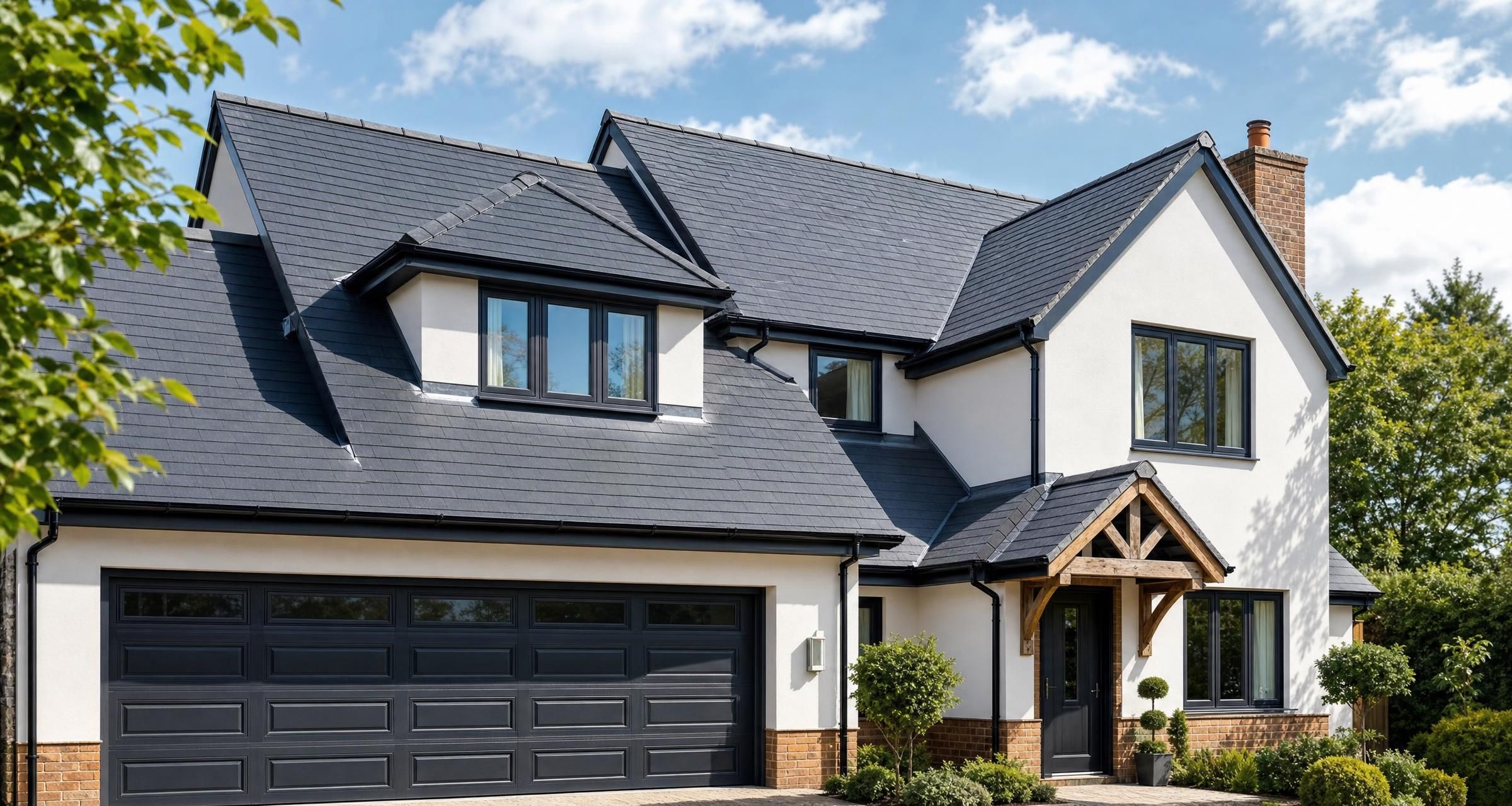
Roofers in South Benfleet
Finding reliable Roofers in South Benfleet is about more than stopping a visible leak. A roof is a system of tiles or slates, battens, underlay, timber, flashings, gutters, ventilation and drainage details. Failure in one area can allow water into another, so the stain on a bedroom ceiling is not always directly below the defect.
For homeowners, the first job is to understand whether you need a minor repair, routine maintenance, partial renewal or a full replacement. The second is choosing a roofer who can diagnose the cause properly, explain the proposed work in plain language and provide a detailed written quote.
This guide explains the roofing work commonly needed on UK homes, realistic 2026 costs, safety requirements, planning and Building Regulations considerations, and how to assess roofers before committing to a job.
What Roofers in South Benfleet Can Help With
A competent roofing contractor should be able to inspect, diagnose and repair both pitched and flat roofs. Some firms specialise in particular materials, so ask whether they regularly work with your roof type before arranging a visit.
Pitched roof repairs
Pitched roofs are generally finished with concrete tiles, clay tiles, natural slate, fibre cement slates or composite products. Common repair work includes replacing cracked or slipped tiles, renewing ridge and hip bedding, repairing verges, replacing damaged battens and addressing failed underlay.
Small visible defects can be misleading. A few missing tiles after high winds may be straightforward, but recurring slipped tiles can indicate deteriorating nail fixings, rotten battens, inadequate mechanical fixing or movement in the roof structure. A roofer should check beyond the tile that has fallen rather than simply fitting a replacement and leaving the underlying fault unresolved.
Leadwork and flashing repairs
Lead is widely used around chimneys, roof valleys, abutments, dormers and soil pipe penetrations. It is durable when correctly formed and fixed, but can crack, split, lift or fail where it meets mortar.
Chimney flashing defects are a frequent source of leaks. Loose mortar pointing around a stepped flashing can let water behind the lead, while cracked soakers beneath tiles can direct water into the roof space. Proper repair may involve removing several courses of tiles, fitting new leadwork, renewing soakers and repointing the chase. Smearing sealant over failed flashing rarely provides a lasting repair.
For a more detailed explanation of symptoms and proper repair methods, read Lead Flashing Repair Explained for Homeowners Common Failures Best Fixes and When Replacement Is Needed.
Flat roof repairs and renewal
Flat roofs commonly use felt systems, GRP fibreglass, EPDM rubber, liquid applied membranes or single ply coverings. The correct repair depends on the existing covering, the condition of the deck and whether the roof drains properly.
Typical signs of failure include blistering felt, splits at joints, standing water, loose edge trims, cracking around outlets and leaks at adjoining walls. Water should drain from a flat roof effectively. A roof that holds shallow puddles for a short period after heavy rain is not automatically defective, but persistent ponding can shorten the life of many coverings and should be investigated.
A roofer should establish whether a leak comes from the membrane, perimeter detail, rooflight, outlet, flashing or a blocked gutter. Recoating a roof with a surface product may be suitable for a sound substrate with local weathering, but it will not solve wet insulation, rotten decking or poor falls.
Gutters, fascias, soffits and roofline work
Gutters and downpipes are part of the roof drainage system. Blockages, poor falls, leaking unions and inadequate downpipe capacity can cause overflow onto brickwork, timber eaves and foundations. Over time, this can lead to rot in fascia boards and water penetration at the roof edge.
Roofline work may include timber repair, replacement uPVC fascia and soffit boards, gutter renewal, bird guards and eaves protection trays. Ask whether old timber is being inspected and repaired where needed. Fitting new plastic boards over rotten timber merely conceals a problem.
Homeowners can reduce avoidable damage with regular checks. Expert Tips on Maintaining Your Roof and Gutters covers practical maintenance tasks and warning signs worth acting on early.
Full roof replacement and structural work
A complete reroof normally involves stripping the existing covering, inspecting rafters and timbers, fitting breathable underlay and battens, renewing flashings, replacing tiles or slates and dealing with ridge, verge and ventilation details. Scaffold access is usually needed.
Where rafters are sagging, ceiling ties have been altered, timber is decayed or previous work has overloaded the roof, a structural assessment may be required. This is not a repair to leave to guesswork. Alterations to the roof structure may need Building Regulations approval and, in some cases, calculations from a structural engineer.
How a Roofer Should Inspect Your Roof
A proper survey begins with questions. When did the leak first appear? Does it occur after wind driven rain or only prolonged rainfall? Is it worse near a chimney, valley, rooflight or gutter? Has work been done recently? These details help the roofer identify likely routes for water entry.
The inspection should normally include a view from ground level, close inspection from safe access where justified, checks inside the loft and assessment of gutters and flashings. Loft evidence is particularly useful. Damp staining, mould, wet insulation, daylight around roof penetrations and damp rafters can help pinpoint a problem.
A contractor should not need to walk across every tiled roof. Walking carelessly on brittle tiles can cause more damage than it finds. Drone surveys can be useful for initial views, especially on difficult roofs, but they do not replace close checks of flashings, fixings and internal signs of water ingress.
For roof work, safety is a professional responsibility. The Health and Safety Executive states that work at height must be planned and carried out by competent people using suitable equipment. Homeowners can read the HSE guidance on working at height. Ladders may be suitable for short, low risk tasks, but they are not normally appropriate for extensive repairs, stripping work or work requiring both hands.
Typical Roofing Costs for UK Homeowners in 2026
Roofing prices vary significantly because access, roof pitch, property height, material choice, hidden timber condition and waste disposal all affect the final figure. Labour rates also vary by contractor and workload. The ranges below are practical budgeting figures rather than fixed prices.
| Type of work | Typical price range including labour and materials | Likely timeframe |
|---|---|---|
| Replace a small number of tiles or slates from safe access | £180 to £450 | Half a day to one day |
| Repair a localised leak around flashing or a small valley section | £350 to £1,200 | One to two days |
| Repoint or renew chimney flashing | £600 to £1,800 | One to three days |
| Renew ridge tiles using a dry fix system | £900 to £2,500 | One to three days |
| Replace gutters and downpipes on a typical house | £700 to £2,000 | One to two days |
| Small flat roof replacement | £1,500 to £4,500 | Two to four days |
| Full reroof of a typical three bedroom semi detached house | £8,000 to £18,000 or more | One to two weeks |
Scaffolding is often a substantial separate cost. For a straightforward house, allow roughly £900 to £2,500, although complicated access, pavement licences, chimneys, conservatories and longer hire periods can increase this. If scaffold is required, the quote should say whether it is included, how long it will remain in place and who is responsible for any permit.
Material selection has a major effect on reroofing costs. Concrete tiles are widely used and generally cost less than natural slate, while clay tiles and premium composite systems sit at different price points depending on the product. Matching existing tiles may be difficult if the original range has been discontinued or weathered over decades.
Before choosing a covering, read Roof Tile Types Explained Clay Concrete Slate and Composite Options for Homeowners. The roof structure, pitch, exposure, local appearance requirements and manufacturer fixing specification all need consideration.
For a fuller breakdown of replacement costs, including labour and scaffold allowances, see How Much Does It Cost to Replace a Roof in the UK in 2026? Materials, Labour and Scaffolding Explained.
What makes one roofing quote higher than another?
A lower price is not automatically better value. One roofer may be pricing to replace the visible tiles only, while another has included scaffold, replacement battens, underlay, valleys, leadwork, ventilation, waste removal and making good internal damage where agreed.
Roof pitch also affects labour. A steep roof requires more careful access and slower handling of materials. Chimneys, dormers, rooflights, solar panels, conservatories and limited side access can all add time and cost. If rotten timber is uncovered after stripping, this should be treated as a potential variation, with the contractor explaining the defect and price before proceeding wherever practical.
Planning Permission and Building Regulations for Roofing Work
Many repairs can be carried out without planning permission. Replacing like for like tiles, repairing flashings or renewing gutters is generally routine maintenance. However, planning control may apply where work materially changes the appearance of the roof, particularly on listed buildings, properties in conservation areas or homes affected by an Article 4 direction.
Changing from one roofing material to another can be more sensitive if it significantly alters the appearance of the house. Raising the roof, adding dormers, changing roof shape or undertaking a loft conversion is more likely to involve planning considerations. The government provides a useful starting point at when you need planning permission.
Building Regulations are separate from planning permission. A replacement roof covering may require Building Regulations consideration if more than 25 per cent of the roof area is renovated or replaced, particularly where thermal elements are affected. Replacing a roof can also bring requirements relating to insulation, ventilation, fire safety and structural loading.
Adding heavier materials is a key example. Natural slate or concrete tiles may weigh more than the existing covering, and the rafters must be capable of supporting the new load. A roofer should not assume that any product can be installed on any roof simply because it looks suitable.
Roof ventilation is another area where poor work causes expensive problems. Modern breathable membranes help manage moisture but do not eliminate the need for correctly designed ventilation in every roof build up. If warm moist air from the house reaches cold roof timbers and cannot escape, condensation can lead to mould, damp insulation and timber decay.
Ask who will deal with Building Control if the work needs approval. Do not accept vague assurances that regulations do not apply. A reputable contractor will identify the likely route before work begins and explain whether an application, inspection or completion certificate is needed.
How to Choose a Reliable Roofing Contractor
Roofing often needs prompt action, especially where water is entering the property. Urgency should not mean accepting the first person who knocks at the door or an unitemised cash price. A good roofer will be willing to explain what they have found and provide enough detail for you to make an informed decision.
Ask about relevant experience
Ask whether the contractor regularly completes work similar to yours. A roofer experienced in tiled pitched roofs may not be the best choice for a complex GRP flat roof, lead valley renewal or heritage slate work. Request examples of comparable work and ask what system or material they propose to use.
For major work, check whether the contractor is associated with recognised schemes or trade bodies where relevant. Membership is not a guarantee of quality, but it gives you another route for checking credentials. TrustMark registered firms can be searched through the TrustMark register.
Check insurance and workmanship cover
Ask to see current public liability insurance and confirm the level of cover. Employers liability insurance is relevant where the business employs staff. For a substantial reroof, ask what workmanship guarantee is offered, how long it lasts, what it covers and whether manufacturer backed cover is available for the roofing system.
A guarantee should be in writing. It should identify the contractor, property address, scope of work, start date and exclusions. A promise that a roof is guaranteed for twenty years has little value if nobody can explain whether it covers materials, labour, storm damage, blocked gutters, movement or only a particular membrane.
Look for a clear diagnosis
Be cautious if a contractor proposes a full roof replacement without explaining why repair is unsuitable. There are cases where replacement is the sensible option, such as widespread failure of battens and underlay, repeated leaks across several areas, major material deterioration or a roof near the end of its serviceable life. The decision should be based on evidence.
Similarly, be wary of someone claiming to repair a serious leak permanently using only foam, mastic or surface coating. Sealants have a place for limited details and temporary weathering protection, but roofing is normally repaired through proper laps, flashings, fixings and drainage paths.
What to Include When Requesting Roofing Quotes
Provide enough information for roofers to understand the job before visiting. This reduces vague estimates and helps each contractor price the same scope.
- Your property type and approximate number of storeys
- Whether the roof is pitched, flat or a combination of both
- The roof covering, if known, such as concrete tile, clay tile, slate, felt, GRP or EPDM
- Clear photos from ground level, the loft and any visible internal damp area
- The location of the problem, such as chimney, valley, ridge, eaves, rooflight or rear extension
- When the issue occurs and whether it follows heavy rain, wind or snow
- Any recent roofing, solar panel, chimney or loft work
- Known access restrictions, conservatories, shared drives or limited parking
- Whether you want repair only, a condition report or a quote for replacement options
For a full reroof, ask each contractor to confirm the exact covering, brand where known, colour, underlay type, battens, ridge and verge system, leadwork allowance, ventilation provision, scaffold, waste disposal and whether new fascias or gutters are included. A quote saying “reroof house” is not enough.
How to Compare Roofing Quotes Fairly
Set each quote side by side and compare inclusions, not just the total price. If one contractor has allowed for a dry ridge system and another has allowed for mortar bedding, they are not offering the same work. If one has included stripping, disposal and replacement of all battens while another has not, the lower price may increase later.
| Item to compare | Questions to ask |
|---|---|
| Access | Is scaffold included, where will it be erected and how long is hire allowed for? |
| Strip out | Are old tiles, felt, battens and waste removal included? |
| Timber repairs | What happens if damaged rafters, fascia boards or decking are found? |
| Materials | What exact tile, slate, membrane, flashing and fixing system is being used? |
| Weather protection | How will the roof be protected if rain arrives during the work? |
| Guarantee | What is covered, for how long and is it provided in writing? |
| Payment | Is there a deposit, are stage payments proposed and what triggers the final payment? |
For larger projects, avoid paying the full contract sum upfront. A reasonable deposit may be requested for materials or to secure a start date, but payments should reflect visible progress. Keep written records of agreed variations, particularly if hidden defects are discovered after the roof covering is removed.
Common Roofing Mistakes That Cost Homeowners More
Ignoring a small leak
Water can travel along rafters, felt and ceiling joists before becoming visible. By the time a ceiling stain appears, insulation may be wet and timber may have been exposed to moisture for some time. Early investigation is usually cheaper than waiting for plaster damage or rot.
Replacing tiles without checking the cause
Tiles can slip because of broken fixings, worn battens, wind uplift or poor installation. Replacing the same tiles repeatedly is not a solution if the support beneath them is failing. Ask the roofer what caused the damage and what has been done to prevent recurrence.
Using incompatible materials
Some roofing materials react poorly with others. Lead, cement, sealants, membranes and fixings must be compatible with the roof system. Leadwork also needs room to expand and contract. Long unjointed pieces of lead are more likely to crack.
Blocking ventilation at eaves
Insulation upgrades can accidentally block airflow at the eaves. This can increase condensation risk in the loft. If insulation is being topped up during roofing work, maintain the intended ventilation gap and use suitable eaves ventilation details where required.
Choosing a quote with no specification
A very short quote gives little protection if there is a dispute. If tiles are not named, scaffold is not mentioned and waste is not included, it is difficult to establish what the price covers. Clear paperwork is not bureaucracy. It is how both parties avoid misunderstandings.
Practical Checks You Can Make Before Booking a Roofer
You do not need to climb onto the roof. In fact, homeowners should avoid roof access without suitable equipment and experience. A safe ground level check and loft inspection can still provide useful information.
- Look for slipped, cracked or missing tiles from the ground
- Check whether ridge tiles or verge mortar appear loose or cracked
- Inspect gutters during rainfall for overflow and leaking joints
- Look for damp patches, mould or dripping in the loft
- Check flashing around chimneys and walls for visible gaps or lifted edges
- Note any sagging roofline or uneven areas
- Photograph water staining before it dries or is redecorated
- Clear leaves from accessible gutters only where it can be done safely
If water is entering the home, move belongings away from the affected area, place containers beneath drips and isolate electrical circuits if water is near light fittings or wiring. Contact an electrician if there is any concern about electrical safety. A roofer can provide a temporary weatherproof repair where conditions permit, then return for permanent work once materials and access are arranged.
FAQ About Roofers in South Benfleet
How much do Roofers in South Benfleet charge for a roof repair?
Minor repairs may cost from around £180 to £450 where access is straightforward and only a few tiles or slates need replacement. Repairs involving chimney flashing, valleys, ridge work, rotten battens or scaffold access can cost £600 to £2,000 or more. The best way to control cost is to obtain an itemised quote that separates access, labour, materials, waste removal and possible additional repairs.
Do I need planning permission to replace my roof?
Like for like roof replacement often does not need planning permission, but permission may be required if the work materially alters the appearance or shape of the roof, or if the property is listed, within a conservation area or subject to local restrictions. Replacing a roof covering can also raise Building Regulations issues, especially where more than 25 per cent of the roof is renovated or thermal performance is altered. Check the position before work starts rather than relying on assumptions.
Should I repair or replace an ageing roof?
Repair is usually sensible where the defect is localised and the wider roof remains sound. Replacement becomes more cost effective where failures are widespread, the underlay and battens have deteriorated, leaks keep returning, large sections of tiles are damaged or the roof needs substantial structural work. Ask for evidence from the inspection, including photographs where possible, and request separate prices for repair and replacement if both are viable.
How long does a full reroof take?
A typical house reroof often takes between one and two weeks once scaffold is erected, though weather, roof size, material choice and hidden repairs can extend the programme. Slate work, complex valleys, chimneys, structural repairs and difficult access all take longer. Your contractor should explain the expected programme, how the roof will be protected each evening and what happens if poor weather delays the work.
Can a roofer fix a leak in wet weather?
Some emergency measures can be completed in wet conditions, such as securing a loose tile or applying temporary protection where safe. Permanent repairs often need dry conditions so materials can be installed and sealed properly. Roofers must also consider wind, slippery surfaces and safe access. A responsible contractor will not take unsafe risks simply to complete a job during severe weather.
Final Thoughts
Roofing work is one area where accurate diagnosis matters as much as skilled installation. Deal with leaks promptly, insist on a written scope of work and compare quotes based on what is actually included. For major repairs or replacement, make sure access, materials, ventilation, waste removal, guarantee terms and any Building Regulations responsibilities are agreed before the roof is stripped.
If you need help with a repair, inspection or replacement, post a job on BookaBuilderUK to receive free quotes from vetted local tradespeople.


