
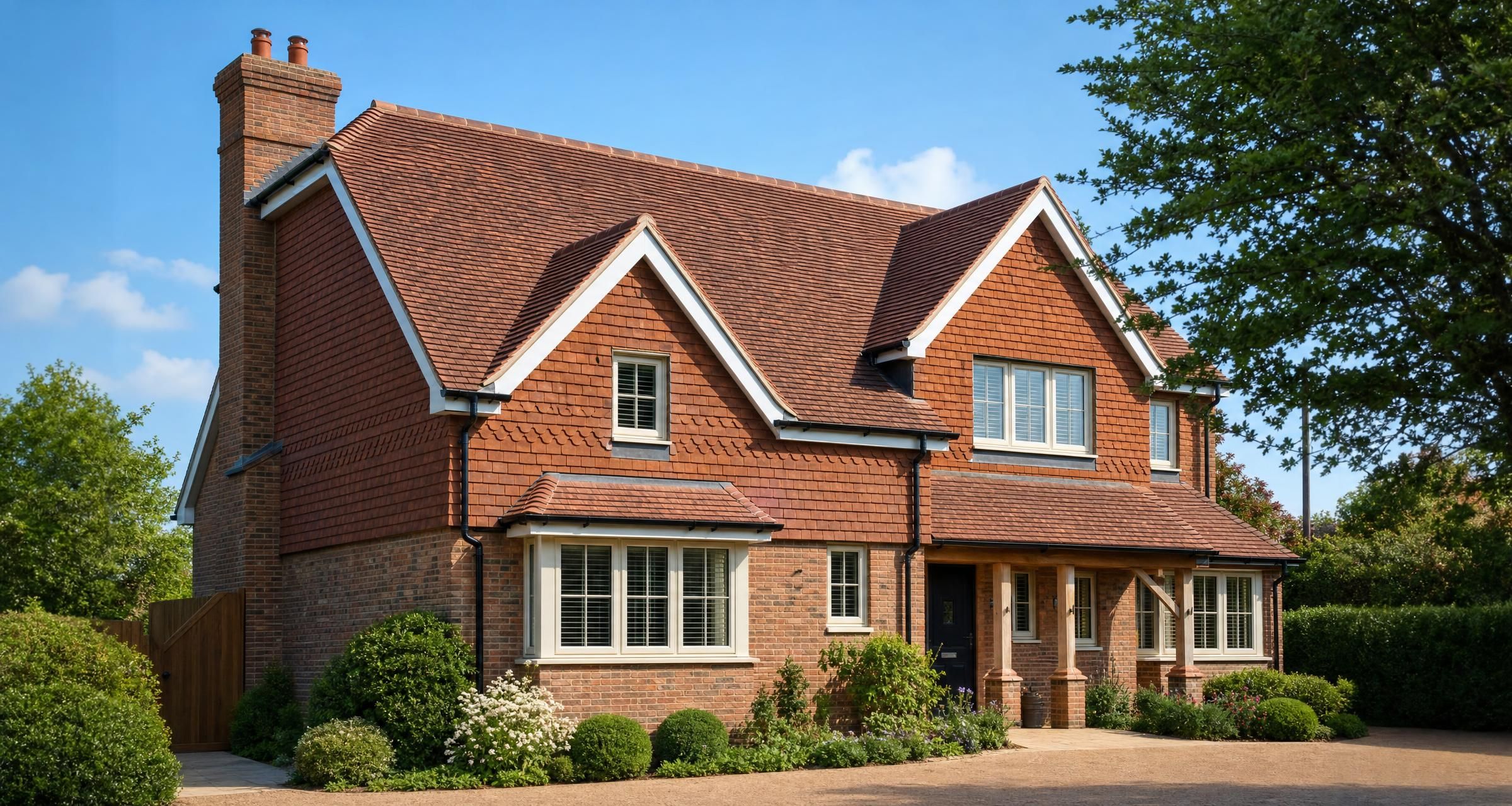
Roofers in Southminster
Finding reliable Roofers in Southminster starts with understanding the condition of your roof, the scope of work required and what a proper roofing quote should include. A roof can appear sound from ground level while allowing water into the loft through failed flashing, cracked tiles, worn felt or blocked gutters. Acting early is usually far less expensive than waiting for a visible ceiling stain or a major leak.
Whether you need a small repair, replacement tiles, chimney work, flat roof renewal or a complete new roof covering, the right roofer should diagnose the cause of the problem before recommending a solution. Good roofing is about more than putting materials back in place. It involves correct drainage, ventilation, weatherproofing, safe access, compatible materials and sound detailing around every junction.
What Roofers in Southminster can help with
Roofing work ranges from straightforward maintenance to substantial structural projects. A competent roofer should be able to explain which category your issue falls into, what needs doing immediately and what can reasonably be monitored.
Roof repairs
Most homeowners contact a roofer because of a leak, slipped tile or visible damage after high winds. Common repair work includes replacing broken or missing tiles, securing ridge tiles, repairing valleys, renewing lead flashings, clearing failed mortar, fixing loose verge tiles and repairing damaged guttering.
A small leak is not always a small job. Water can enter at one point and travel along rafters, battens or membrane before appearing elsewhere. For that reason, a roofer should inspect the roof slope, flashing details, chimney, valleys, gutters and loft space where access is possible.
Tile and slate replacement
Individual clay, concrete and slate units can crack, slip, delaminate or become loose as fixings age. Replacing a few units may be practical, provided suitable matching materials are available and the surrounding roof remains sound.
Older roofs can contain brittle tiles that break during access. A roofer should allow for this possibility rather than promising an exact number of replacements without inspecting the roof. Read Roof Tile Types Explained Clay Concrete Slate and Composite Options for Homeowners if you are deciding whether to retain an existing material or change the roof covering during larger works.
Flat roof repairs and replacement
Flat roofs are commonly found on garages, porches, extensions, dormers and bay windows. They are never truly flat. They need adequate falls so rainwater drains towards outlets rather than ponding on the surface.
Common flat roof systems include felt, GRP fibreglass, EPDM rubber and single ply membranes. Repairs may involve patching a split, resealing an edge, renewing a flashing or clearing an outlet. If the deck is wet, soft or rotting, patching the top surface alone may not solve the problem.
Chimneys, leadwork and flashing
Chimneys are one of the most frequent sources of roof leaks. Mortar can crack, flaunching can fail around chimney pots, lead soakers can slip, and flashings can split or lift away from brickwork.
Lead needs to be correctly dressed, fixed and detailed to allow for movement. Excessive sealant is often a warning sign that a previous repair has been improvised. For a fuller explanation of common defects, see Lead Flashing Repair Explained for Homeowners Common Failures Best Fixes and When Replacement Is Needed.
Gutters, fascias and soffits
Roof drainage is part of the roofing system. Overflowing gutters can soak fascia boards, run down external walls and increase damp risks around windows and masonry. A roofer may repair brackets, renew joints, realign gutter falls, replace damaged sections or fit new fascias and soffits where timber has decayed.
Gutter cleaning is often worthwhile, but repeated overflow may indicate an incorrect fall, undersized outlets, sagging brackets or a roof valley discharging too much water into one point.
Complete roof replacement
A full reroof normally involves stripping the existing covering, inspecting rafters, replacing damaged timbers where needed, fitting new breathable membrane and battens, then installing the new tiles or slates with appropriate flashings and ventilation details.
A roof does not always need replacing because it looks old. Many older roofs have years of service left if repairs are targeted. Conversely, widespread broken tiles, deteriorated underfelt, failing battens and recurring leaks can make repeated repair poor value.
How to tell whether your roof needs urgent attention
Some roofing faults should be dealt with promptly because water damage can spread quickly. Others can be booked as routine maintenance work. Avoid climbing onto the roof yourself. A wet or mossy roof is dangerous, and stepping in the wrong place can break tiles or damage the covering further.
| Sign | Likely cause | Typical urgency |
|---|---|---|
| Water dripping into a room | Active leak through covering, flashing, valley or rooflight | Urgent, arrange temporary protection and inspection |
| Brown ceiling stain | Historic or ongoing water ingress | Prompt investigation before redecorating |
| Missing tiles after wind | Failed fixings or wind damage | Prompt repair, especially before heavy rain |
| Loose ridge or verge tiles | Failed mortar or mechanical fixings | Urgent if there is a falling material risk |
| Gutter overflowing in rain | Blockage, poor alignment or broken joint | Routine but do not leave through winter |
| Moss growth | Shade, moisture retention and aged surface | Assess carefully, do not pressure wash tiles |
| Sagging roof line | Possible structural movement, decayed timber or loading issue | Urgent professional inspection |
If you can safely access the loft, look for wet insulation, staining on timbers, damp smells, daylight around roof penetrations or drips during rainfall. Do not disturb insulation around electrical cables, and do not assume the visible wet patch marks the entry point.
What a proper roof inspection should involve
A good inspection is systematic. The roofer should look at the roof from ground level, inspect the covering where safe access is available, assess flashings and drainage, and consider internal evidence from the loft. Photographs are helpful, particularly for areas you cannot safely see.
For more involved work, access arrangements should be discussed before a final price is agreed. A roofer may need scaffolding, a tower or other suitable working platform. Ladders can be appropriate for short inspections and minor tasks, but they are not always suitable for longer repairs or extensive work.
The Health and Safety Executive provides guidance on working at height. Homeowners should be wary of anyone willing to carry out major roof work from an unstable ladder with no realistic access plan.
Questions to ask during an inspection
- What is the confirmed source of the problem?
- Is the issue limited to the covering, or are battens, membrane or timbers affected?
- Can the work be repaired, or is replacement more sensible?
- Will matching tiles, slates or ridge units be available?
- Does the quote include access equipment, waste removal and making good?
- Will photos be supplied before and after the work?
- What guarantee is offered for workmanship and materials?
- Is any further inspection needed once coverings are lifted?
Choosing a roofer with the right experience
Roofing is a specialist trade. A general builder may be suitable for minor maintenance, but complex slate work, flat roofing systems, leadwork, heritage materials, structural repairs and full reroofs need proven roofing experience.
Ask for evidence of recent work similar to yours. A roofer who regularly installs concrete tiles may not be the best choice for detailed natural slate repairs. Likewise, a contractor experienced in felt may not specialise in GRP or EPDM flat roofs.
Checks worth making before appointing anyone
- Confirm the trading name, contact details and business address.
- Ask whether they hold public liability insurance and request confirmation where appropriate.
- Check that the scope of work is written down before work begins.
- Ask who will carry out the work and whether subcontractors will be used.
- Establish how access, scaffolding and waste removal will be managed.
- Agree payment stages and avoid paying the full balance in advance.
- Ask for a written guarantee that identifies what is covered and for how long.
- Check whether replacement work needs Building Regulations approval or a certificate.
Trade memberships can be useful supporting evidence, but they do not replace a clear written quote, insurance, relevant experience and sensible communication. Be cautious where someone claims a roof needs immediate full replacement but cannot explain the faults in plain terms or provide photographs.
How to request useful roofing quotes
Vague requests produce vague quotes. Give each roofer the same information so you can compare like for like. Include photographs from the ground where possible, the age of the roof if known, the location of any leak, whether it occurs only in wind driven rain and whether there is loft access.
For a larger project, ask each contractor to set out the materials, quantities where practical, workmanship, access costs, waste disposal, contingency allowances and VAT position. A quote saying only “repair roof” leaves too much room for dispute.
Details to include in a written roofing quotation
- Exact roof area or section covered by the price.
- Material type, manufacturer and colour where relevant.
- Whether existing tiles, slates, felt and battens will be removed.
- Provision for replacing defective timber found after strip out.
- New underlay, battens, fixings, ventilation and ridge details.
- Leadwork, valleys, chimney repairs and roofline items.
- Scaffolding or other access arrangements.
- Waste removal, skips and site protection.
- Estimated start date and expected duration.
- Payment schedule, guarantee and exclusions.
A sensible quote will sometimes include a provisional allowance for concealed timber repairs. This is not automatically a concern. Roofers cannot always see the condition of rafters, battens or decking until the roof is opened up. The key point is that the contractor explains the allowance, obtains agreement before extra work and records any changes in writing.
Typical roofing costs for homeowners
Roofing costs vary according to access, roof pitch, material, roof size, detailing and the condition found beneath the surface. Southminster homeowners should obtain site specific quotes, particularly where scaffolding or structural repairs may be needed.
| Type of work | Typical UK price range | Usual timeframe |
|---|---|---|
| Replace a few slipped or broken tiles | £180 to £450 | Half day to one day |
| Minor flashing or mortar repair | £250 to £750 | One day |
| Gutter clearing and minor repairs | £120 to £350 | Half day |
| Renew a small flat roof | £1,200 to £3,500 | One to three days |
| Chimney repointing and leadwork repairs | £800 to £2,500 | Two to five days |
| Scaffolding for a typical house roof | £800 to £2,500 | Usually erected before work starts |
| Full reroof using concrete tiles | £7,000 to £16,000 or more | One to three weeks |
| Full reroof using natural slate | £12,000 to £30,000 or more | Two to four weeks |
These figures are broad working ranges rather than fixed prices. A simple two slope roof is generally less costly than a roof with multiple valleys, dormers, rooflights, chimneys and difficult access. Natural slate, handmade clay tiles and extensive leadwork also increase labour time and material costs.
For a closer look at the financial side of a major project, including labour, materials and access, read How Much Does It Cost to Replace a Roof in the UK in 2026? Materials, Labour and Scaffolding Explained.
Planning permission and Building Regulations for roofing work
Like for like roof repairs and replacement tiles do not usually need planning permission. However, permission can be required if work materially changes the appearance of the roof, particularly on protected buildings or in designated areas. Changing from one roof material to another can also require consent in some circumstances.
The best starting point is the Planning Portal guidance on roofing planning permission. If your property is listed, has unusual planning restrictions or lies within a conservation area, seek advice from the relevant local planning authority before ordering materials or starting work.
Building Regulations can apply when more than 25% of the surface area of a roof’s thermal element is replaced or renovated. This can trigger a requirement to upgrade the insulation for the whole thermal element, subject to the work being technically, functionally and economically feasible. See the official Planning Portal guidance on Building Regulations for roofing.
Under current rules, work to an existing roof may need insulation improvements where technically and economically feasible. This should be discussed before strip out. Adding insulation can affect ventilation arrangements, eaves details and condensation risk, so it should not be treated as an afterthought.
Ask the roofer whether they will arrange Building Control approval, use a competent person scheme where applicable, or provide any completion certificate. The homeowner should retain certificates, warranties, invoices and photographs as part of the property record.
Roofing mistakes that cost homeowners money
Choosing only on the lowest price
The lowest quote can become the most expensive if it excludes scaffolding, underlay, leadwork, waste, VAT or timber repairs. It may also rely on inferior materials or rushed workmanship. Compare scope, not just the total figure.
Accepting a diagnosis without evidence
Not every damp patch means a full reroof. Ask for photographs and an explanation of the failure. Conversely, do not accept repeated surface repairs where the underlying roof has reached the end of its serviceable life.
Pressure washing roof tiles
High pressure cleaning can dislodge granules from concrete tiles, force water beneath the covering and damage older materials. It can also create unsafe working conditions. Moss treatment may be appropriate in some situations, but it should be assessed carefully and carried out with controlled access.
Using sealant as a permanent repair
Roofing sealant has limited uses. It is not a substitute for correctly formed leadwork, a sound valley, proper tile fixing or renewed felt. Heavy use of mastic around flashing often fails after seasonal movement.
Ignoring ventilation after insulation upgrades
Warm, moist air from the home can condense within a poorly ventilated roof space. If insulation is increased during reroofing, ensure the roofer considers ventilation at eaves, ridge or other suitable locations. Condensation can rot timbers just as effectively as rainwater ingress.
Paying too much too early
Deposits may be reasonable for special order materials or booking substantial work. Full payment before completion is rarely sensible. Agree staged payments that reflect actual progress, and retain a final balance until the agreed work has been completed and checked.
Practical roof maintenance between professional visits
A little routine attention helps extend the life of roof materials and can reveal problems early. The aim is observation and safe maintenance, not climbing onto the roof.
- Check gutters during rainfall to identify overflow or leaking joints.
- Clear leaves from gutters and gullies at least twice a year, more often near mature trees.
- Look for slipped tiles, cracked ridge units and damaged flashings from ground level.
- Inspect the loft after prolonged rain for staining, drips or damp insulation.
- Keep roof valleys and gutter outlets clear of debris where this can be done safely.
- Trim vegetation that rubs against the roof or blocks gutters.
- Arrange an inspection after severe weather if tiles, branches or debris have fallen.
Regular care is usually cheaper than emergency repairs. For seasonal checks and sensible maintenance routines, see Expert Tips on Maintaining Your Roof and Gutters.
FAQ about Roofers in Southminster
How quickly can Roofers in Southminster repair a leaking roof?
Response times depend on weather, access and workload, but an active leak should be treated as a priority. A roofer may first carry out a temporary repair, such as securing a tarpaulin or replacing a missing tile, before returning for a permanent repair in dry conditions. If water is entering your home, move possessions away from the affected area, place containers beneath drips and avoid touching wet electrical fittings.
Do I need scaffolding for roof repairs?
Not every repair needs scaffolding. A small isolated tile replacement may be completed safely with suitable ladder access and roof safety equipment. Scaffolding is more likely for chimney repairs, major flashing work, extensive tile replacement, full reroofing and work over conservatories or awkward extensions. Access should be based on risk and practicality, not simply on what produces the cheapest quote.
How do I know whether I need a roof repair or a complete reroof?
A repair is often suitable where the roof is generally sound and a fault is localised. A complete reroof may be better value where there are widespread failing tiles or slates, degraded underlay, rotten battens, recurring leaks in several areas or a large amount of previous patching. Ask for an explanation of the roof condition, photographs and a comparison of repair versus replacement options.
Will replacing my roof require Building Regulations approval?
It may. Replacing or renovating more than 25% of the surface area of a roof’s thermal element can trigger Building Regulations approval and a requirement to improve insulation across the whole thermal element, where this is technically, functionally and economically feasible. Structural alterations, rooflights, loft conversions and changes to the roof layout also commonly need approval. Check the official Planning Portal roofing guidance, and ask your roofer before work starts who is responsible for checking compliance and arranging any required certification.
What should I do if a roofer finds rotten roof timbers?
Ask for photographs and a clear description of which timbers are affected. Battens and localised fascia boards are commonly replaced during roofing work. Rafters, purlins or trusses need more careful assessment because they are structural elements. The contractor should explain the proposed repair, cost and whether Building Control or structural advice is required before proceeding.
Final Thoughts
A sound roof depends on good diagnosis, safe access, suitable materials and careful workmanship around details such as valleys, flashings, ridges and gutters. Obtain written quotes, compare the full scope of work and do not delay where water is entering the property or roof materials are loose.
If you need roofing repairs, maintenance or a full replacement, post a job on BookaBuilderUK to receive free quotes from vetted local tradespeople.


