
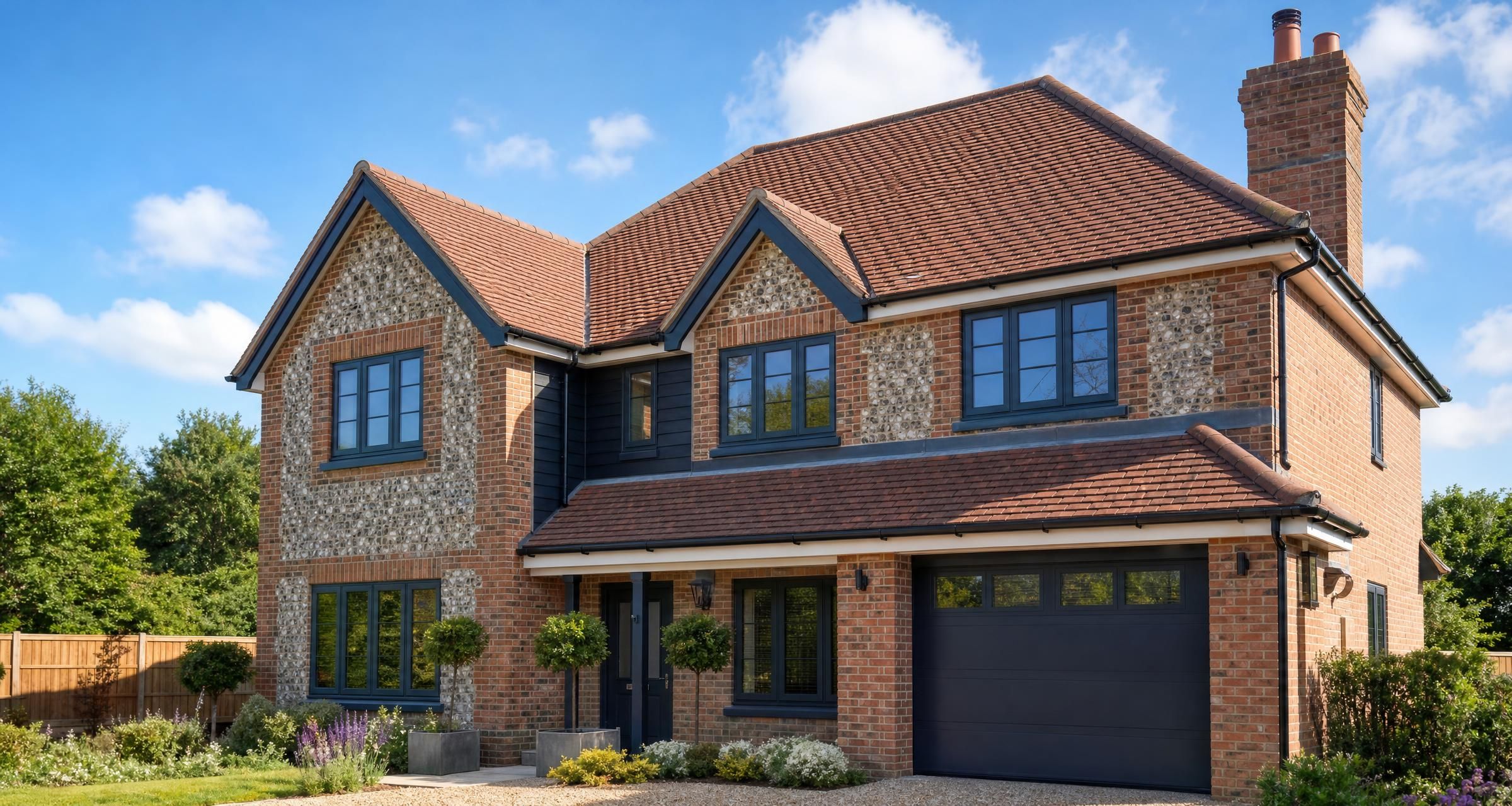
Roofers in Witham
Finding reliable Roofers in Witham is about more than stopping a visible leak. A roof is a working system made up of coverings, battens, underlay, flashings, gutters, ventilation and supporting timbers. A fault in one area can cause damage elsewhere, so the best repair is rarely the one that simply covers the symptom.
Whether you need a slipped tile replaced, a flat roof renewed, chimney flashing repaired or a full reroof, the first step is a proper inspection. Homeowners often call a roofer after noticing a damp ceiling stain, but water can travel along timbers and roof membranes before becoming visible indoors. The entry point may be several metres away from the stain itself.
This guide explains the work a roofer can carry out, realistic costs, what to ask before accepting a quote and the rules that may apply to your project.
Roofers in Witham
A competent roofer can deal with much more than broken tiles. Roofing work ranges from small reactive repairs to carefully planned replacement projects involving scaffolding, insulation upgrades and building control.
| Type of work | What it may involve | Typical reason for calling a roofer |
|---|---|---|
| Tile or slate repairs | Replacing cracked, slipped or missing coverings, renewing fixings and checking battens | Water ingress, visible gaps or storm damage |
| Leadwork and flashings | Repairing lead around chimneys, walls, roof valleys, rooflights and abutments | Damp around chimney breasts or at the top of walls |
| Flat roof repairs | Repairing felt, GRP fibreglass, EPDM rubber, outlets, edge trims and upstands | Ponding water, blistering, splits or leaks below a flat roof |
| Gutters and roofline | Renewing gutters, downpipes, fascias, soffits and verge protection | Overflowing gutters, rotten timber or water running down external walls |
| Chimney work | Repointing, replacing damaged pots, renewing flaunching and repairing flashing | Loose brickwork, falling mortar or a leak around the chimney |
| Full reroofing | Removing old coverings, assessing timbers, fitting membrane, battens, coverings and flashings | Widespread failure, repeated repairs or an end of service life roof |
| Insulation and ventilation | Improving loft insulation, ventilation paths and condensation control | Cold rooms, condensation, mould or heat loss through the roof |
Not every issue needs a new roof. A small number of cracked tiles, localised lead failure or a blocked valley can often be repaired economically. A good roofer should explain whether the defect is isolated or evidence that the roof covering, underlay or battens are failing more widely.
Signs that your roof needs professional attention
Some roof faults are obvious from ground level. Others show themselves only after prolonged rainfall or strong winds. Avoid climbing onto the roof yourself. Roof surfaces can be fragile, especially older fibre cement sheets, weathered tiles, rooflights and decayed boarding.
Arrange an inspection if you notice any of the following:
- Missing, cracked, slipped or uneven roof tiles or slates
- Water marks on ceilings, around chimney breasts or in loft corners
- Damp insulation, mould growth or a persistent musty smell in the loft
- Daylight visible through the roof covering or around the eaves
- Loose ridge tiles, verge tiles or chimney pots
- Gutters overflowing despite having been cleared
- Water pooling on a flat roof for more than forty eight hours after rain
- Blistering, cracking or exposed felt on a flat roof
- Cracked leadwork or open mortar joints around chimney stacks
- Roof timbers that feel soft, stained or show signs of insect activity
After a storm, inspect from ground level and photograph visible damage if safe to do so. Contact your insurer before authorising major works where there is a clear storm event, falling tree damage or sudden impact damage. Emergency protection may still be needed to prevent further loss, so retain invoices and photographs.
What a proper roof inspection should involve
A roofing survey should not be based solely on a photograph taken from the road. The roofer may use a ladder, scaffold access, a pole camera or drone imagery where suitable, but close inspection is often needed to assess flashings, fixings, valleys and the condition of the covering.
For a pitched roof, expect the roofer to look at the condition of tiles or slates, ridge and hip details, mortar, valleys, leadwork, roof vents, chimneys, gutters and verge edges. If access is possible, they should also inspect the loft for water staining, damp insulation, sagging timbers, ventilation and signs that the underlay has deteriorated.
For a flat roof, the survey should examine the surface finish, seams, edge trims, upstands, outlets, falls and the condition of any rooflights. A flat roof that looks acceptable from ground level may have failed joints around an outlet or wall abutment.
Ask for clear photographs and an explanation in plain language. You should be able to see what has failed, understand why the proposed repair addresses it and know whether other areas need monitoring. If the roofer says a complete reroof is necessary, ask which parts are beyond repair and whether an alternative repair would be reasonable.
Choosing a roofer with the right experience
Roofing is a trade where poor workmanship can remain hidden until the next period of heavy rain. Do not select a contractor only because they can start immediately or offer a very low price. A low quote can omit access, waste disposal, leadwork, timber repairs, insulation work or VAT.
Start by checking that the roofer has experience with the type of roof you have. Slate repairs need different handling from concrete tiles. A GRP fibreglass flat roof is not installed in the same way as EPDM rubber or torch applied felt. Lead flashing should be formed and dressed correctly, not covered with sealant as a permanent substitute.
Use the practical checks in How to check a trade is trustworthy before appointing anyone. For roofing projects, take particular care over insurance, written scope, warranty wording and safe access arrangements.
Questions worth asking before you hire
- Have you completed similar work on the same roof type and material?
- Will you inspect the loft as well as the external roof?
- Is scaffolding included, and who is responsible for arranging it?
- Will the quote include waste removal and a skip if required?
- What happens if rotten battens, damaged rafters or failed insulation are found?
- What workmanship guarantee do you provide, and what does it cover?
- Do you hold public liability insurance, and can you provide evidence?
- Will you use your own team or subcontract parts of the work?
- Can you provide a written specification before work starts?
Trade body membership can be a positive sign, but it should not replace due diligence. Check the business name, address, insurance details, recent reviews and examples of comparable completed work. If you are considering a major roof replacement, obtain at least three detailed written quotations.
What to include in a roofing quote request
Roofing quotes are only comparable if each contractor is pricing the same information. Give each roofer photographs where possible, the age and style of the property, the type of roof, the location of the issue and any evidence of leaks. State whether access is restricted by a conservatory, extension, narrow side passage or shared drive.
For a replacement roof, ask each contractor to specify the covering material, colour, membrane, battens, ridge system, leadwork, ventilation provision, insulation works, scaffold, waste removal and anticipated programme. If you want a particular tile or slate, say so at the start. Materials can vary significantly in both price and appearance.
See Roof Tile Types Explained Clay Concrete Slate and Composite Options for Homeowners for a useful overview of the main roof covering choices and the practical differences between them.
Details that should appear in a written quote
| Quote item | Why it matters |
|---|---|
| Scope of work | Confirms exactly what is being repaired, replaced or excluded |
| Materials and quantities | Prevents substitutions and allows you to compare roof coverings fairly |
| Access provision | Scaffold, ladders, edge protection and access towers can be a major cost |
| Timber allowance | Clarifies how hidden defects will be priced if rotten battens or timbers are found |
| Leadwork and flashings | These are common leak points and should not be left vague |
| Waste disposal | Confirms whether stripping and lawful disposal of old materials is included |
| Timescale | Sets realistic expectations for start date, working days and weather delays |
| Payment schedule | Helps avoid large upfront payments with no clear stage of completion |
| Guarantee | Shows the duration and limits of workmanship and material cover |
A sensible payment structure for a larger project may include a modest deposit for ordered materials, followed by stage payments linked to visible progress. Be cautious if a contractor asks for most or all of the money before materials arrive or work begins. Pay by traceable method and keep copies of the agreed quote, invoices, photographs and any variations.
Typical roofing costs in 2026
Roofing costs vary according to access, roof size, pitch, materials, hidden damage and local labour rates. The figures below are broad UK guide prices for standard residential work. Properties with difficult access, complex roof shapes, premium materials or substantial timber repairs may cost more.
| Work | Typical price range | Usual timeframe |
|---|---|---|
| Replace a few slipped or broken tiles | £180 to £500 | Half a day to one day |
| Localised pitched roof repair | £650 to £2,500 | One to three days |
| Renew chimney flashing | £450 to £1,500 | One to two days |
| Chimney repointing and minor repairs | £700 to £2,500 | Two to five days |
| Renew gutters and downpipes on a typical house | £350 to £1,200 | One to two days |
| Small flat roof replacement | £1,200 to £3,500 | Two to four days |
| Medium flat roof replacement | £2,500 to £6,500 | Three to seven days |
| Full reroof of a typical semidetached house | £8,000 to £17,000 | One to two weeks |
| Full reroof of a typical detached house | £12,000 to £25,000 or more | Two to three weeks |
| Scaffolding for a standard house | £900 to £3,000 | Usually hired for the project duration |
For a fuller breakdown of material, labour and access costs, read How Much Does It Cost to Replace a Roof in the UK in 2026? Materials, Labour and Scaffolding Explained.
Scaffolding is not an optional extra on many projects. A contractor working at height has legal duties to plan work safely. The Health and Safety Executive provides guidance on working at height, including choosing appropriate access equipment and preventing falls. Scaffolding can also make a better repair possible because the roofer can safely inspect details rather than rushing work from a ladder.
Why roofing prices vary so much
Two roofs with the same floor area can have very different prices. A simple dual pitched roof with clear driveway access is faster to strip and recover than a roof with multiple valleys, dormers, rooflights, chimneys, solar panels or awkward access.
Material choice has a major effect. Concrete tiles are generally more affordable than good quality clay tiles or natural slate. Natural slate requires skilled sorting, cutting and fixing, and it adds labour time. Composite products can provide a consistent appearance and may suit some projects, but suitability depends on the pitch, structure and manufacturer requirements.
Roof pitch matters too. Steeper roofs require more careful access and take longer to work on. A shallow pitch can require a specific covering system to prevent water being driven beneath tiles. Existing roof condition is equally significant. Once coverings are removed, rotten battens, damaged felt, poor ventilation or decayed timber may become visible.
Ask the contractor to identify likely provisional items rather than giving an artificially fixed figure that assumes everything underneath is sound. A clear quote might state an allowance for replacing a certain number of battens, followed by an agreed price per metre if more are needed. This is more transparent than receiving an unexpected bill at the end.
Planning permission and building regulations for roof work
Many straightforward roof repairs and like for like covering replacements do not need planning permission. However, planning permission may be required if the work materially changes the roof shape, raises the ridge height, creates a dormer, alters a listed building or affects a property subject to specific restrictions. Conservation area controls and permitted development rights can also affect what is allowed.
Check the current position before committing to structural or visible changes. The Government guidance on planning permission in England and Wales is a useful starting point, although your contractor should also flag where specialist planning advice may be needed.
Building regulations are more likely to apply where the roof structure is altered, where more than half of a thermal element is renovated, where a new roof covering significantly changes loading or where insulation is upgraded. Part A deals with structural safety, Part B with fire safety and Part L with conservation of fuel and power.
For example, replacing lightweight covering with a heavier material can require a structural assessment. Adding insulation during a reroof may trigger thermal performance requirements, subject to what is technically and economically feasible. Building control can advise where the scope is unclear. You can find the formal process at building regulations approval.
Do not assume that a contractor will obtain approvals unless this is written into the quote. Confirm who will submit any application, pay the fee, arrange inspections and provide completion documentation.
Common roofing mistakes that cost homeowners more
Accepting a diagnosis without evidence
A ceiling stain does not automatically mean the whole roof has failed. Equally, a roofer who applies sealant to a visible gap may not have addressed the underlying problem. Ask for photographs, an explanation of the water path and a clear statement of why the suggested repair is proportionate.
Ignoring gutters, valleys and flashings
Roof coverings often get blamed for leaks caused by blocked valleys, overflowing gutters or failed flashing. Gutters need a reliable fall towards outlets and downpipes must discharge effectively. Regular care is far cheaper than repairing water damage to fascias, brickwork and internal finishes. Practical seasonal advice is available in Expert Tips on Maintaining Your Roof and Gutters.
Choosing a roofer based only on the lowest number
A quote that is thousands of pounds lower may exclude scaffold, stripping, leadwork, disposal, ridge work or VAT. Compare specifications line by line. If one roofer proposes a dry fixed ridge system and another allows only mortar repairs, they are not offering the same scope.
Allowing work to start without a written agreement
Verbal agreements can lead to disputes about materials, additional works and payment. A simple written agreement should identify the address, scope, price, payment stages, start date, expected duration, exclusions and guarantee.
Covering over a failing roof without investigating the structure
Overlaying some flat roof systems can be appropriate, but only where the existing deck and structure are dry, sound and suitable. Covering trapped moisture can shorten the life of the new surface. On pitched roofs, laying new materials over failed layers without checking battens and ventilation can hide problems rather than resolve them.
A practical checklist before work starts
- Obtain at least three written quotations for substantial work.
- Confirm the contractor has suitable public liability insurance.
- Check exactly which materials, colours and systems will be used.
- Ask whether scaffold, skip hire and waste disposal are included.
- Agree how unforeseen timber repairs will be priced and approved.
- Confirm whether planning permission or building regulations approval may be needed.
- Take photographs of the roof, loft and surrounding areas before work begins.
- Move vehicles, garden furniture and fragile items away from the work zone.
- Tell the roofer about solar panels, satellite dishes, roof alarms or loft conversions.
- Keep a copy of the quote, invoices, product information and workmanship guarantee.
- Inspect the finished work from ground level and ask for photographs of inaccessible areas.
At handover, check that gutters are clear, downpipes are connected, waste has been removed and any damaged garden areas have been discussed. Ask for any manufacturer warranty documents, building control paperwork and confirmation of the guarantee period.
Frequently asked questions about Roofers in Witham
How much do Roofers in Witham charge for a small repair?
A minor repair such as replacing a few tiles may cost from around £180 to £500, depending on access and whether scaffold is required. A localised repair involving flashing, valley work or damaged battens is more often £650 to £2,500. The cost can rise quickly if the defect is close to a chimney, above an extension roof or in an area that cannot be safely reached by ladder.
Ask for the cause of the fault, not just the price to replace the visible tile. A tile may have slipped because its fixing failed, the batten has rotted or wind damage has affected a wider section.
Do I need scaffolding for roofing work?
Not always, but it is often necessary for safe and durable work. A very small repair may be possible from a ladder or access tower where risk has been properly assessed. Larger repairs, chimney work, gutter replacement, flat roof renewal and reroofing commonly require scaffold.
Scaffold adds cost, but it provides safer access, allows materials to be handled properly and gives the roofer time to inspect details. Be wary of anyone proposing major roof work from a ladder alone without explaining their safety arrangements.
Can a leaking roof be repaired in wet weather?
Emergency work can often be carried out in wet conditions, such as securing loose tiles or fitting temporary protection to limit further water entry. Permanent repairs may need dry conditions so membranes, adhesives, mortar, timber and roof coverings can be installed correctly.
A professional roofer should explain whether the proposed work is temporary or permanent. Weather delays are normal in roofing, particularly for flat roof systems and mortar work. A realistic programme includes allowance for unsuitable conditions.
How long should a new roof last?
Life expectancy depends on the material, installation quality, ventilation, exposure and maintenance. A well installed slate roof can last for many decades, while concrete and clay tile roofs can also provide long service where the underlay, battens, flashings and fixings remain sound. Flat roof systems have varying expected lifespans according to the product and installation method.
The covering is only one part of the roof. Regular checks of gutters, flashing, ridge details and loft ventilation help prevent small issues from damaging the components below.
Final Thoughts
Roof repairs are most manageable when problems are dealt with early, documented properly and priced against a clear scope. Seek evidence of the defect, compare like for like quotations and make sure access, materials, safety measures and any approvals are agreed before work begins.
If you need help finding the right professional for a repair or replacement project, post a job on BookaBuilderUK to receive free quotes from vetted local tradespeople.


