
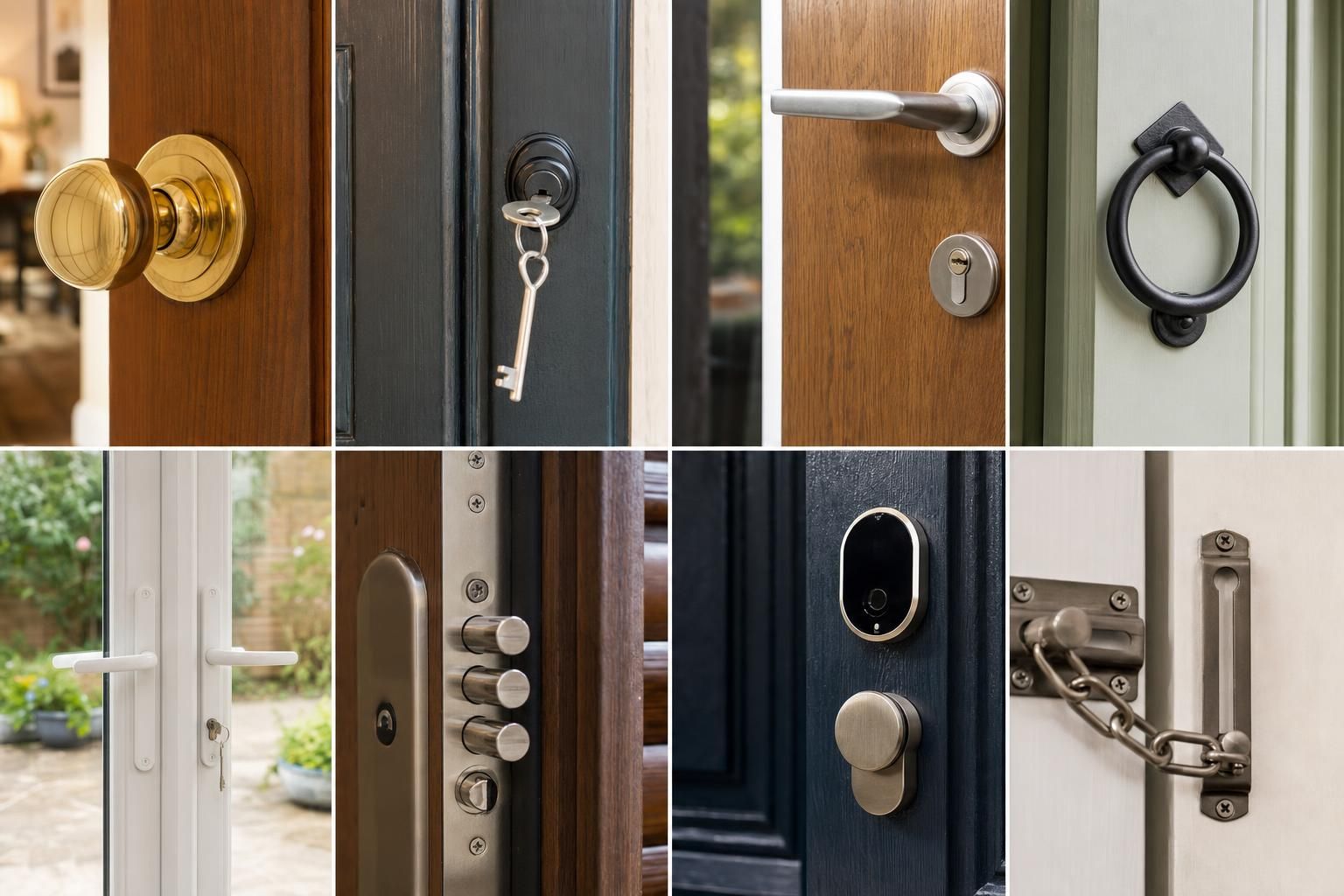
Types Of Door Locks Explained
Understanding the types of door locks used in UK homes helps you choose the right level of security, avoid compatibility problems and get accurate quotes from a locksmith, carpenter or door fitter. A lock that is suitable for a bedroom door will not secure a timber front door, while a replacement cylinder for a uPVC door needs to match both the door thickness and the existing multipoint mechanism.
Most homes have a mixture of lock types. A traditional timber front door may have a rim nightlatch and a five lever mortice deadlock. A newer composite, uPVC or aluminium door is more likely to use a euro cylinder operating a multipoint lock. Internal doors usually have tubular latches, bathroom locks or simple sashlocks.
The right choice depends on the door material, whether the door opens inwards or outwards, the level of risk, your insurance conditions and whether the door forms part of a fire escape route. Security is not solely about buying the most expensive lock. Correct fitting, frame condition, hinge security and properly aligned keeps all matter.
Types of door locks used in UK homes
The names used for locks can be confusing because some describe the key mechanism, some describe the lock body and others describe a whole locking system. The table below sets out the locks a homeowner is most likely to encounter.
| Lock type | Common location | Typical security level | Typical supply cost |
|---|---|---|---|
| Rim nightlatch | Timber front doors | Low to high, depending on model and supporting deadlock | £25 to £180 |
| Mortice deadlock | Timber external doors | High when BS 3621 rated and fitted correctly | £35 to £120 |
| Mortice sashlock | Timber external and internal doors | Moderate to high, depending on rating | £25 to £100 |
| Euro cylinder | uPVC, composite and aluminium doors | Varies widely, high security versions are available | £20 to £120 |
| Multipoint lock | uPVC, composite and aluminium doors | High, provided the cylinder and door alignment are sound | £90 to £350 |
| Bathroom lock | Bathrooms and cloakrooms | Privacy only | £10 to £40 |
| Tubular latch | Internal doors | Not a security lock | £5 to £25 |
| Smart lock | Front doors, side doors and some internal doors | Varies by product, door and installation | £120 to £500 plus fitting |
Supply costs are realistic retail ranges in 2026. Labour is additional. A straightforward cylinder change may take 20 to 40 minutes. Replacing a mortice lock can take one to two hours. Diagnosing and changing a full multipoint mechanism often takes two to four hours, particularly where the door is dropped or the old gearbox has failed.
Rim nightlatches, commonly called Yale locks
A rim nightlatch is fitted to the inside face of a timber door. The latch bolt sits in a surface mounted case indoors, while the key cylinder passes through the door and is visible externally. Many people call every version a Yale lock, although Yale is a manufacturer rather than the generic name for the lock type.
Basic nightlatches allow the door to close and latch automatically. From outside, a key is needed to enter. From inside, the occupant can often open it by turning a handle or knob. This is convenient, but it means the door can be left secured only by the latch if the deadlocking feature is not engaged.
Traditional nightlatches are best used alongside a separate mortice deadlock on a main entrance door. Higher security models have a deadlocking function, stronger case, reinforced strike plate and protected cylinder. Some insurance policies still specify a British Standard mortice deadlock for timber doors, particularly if there is no multipoint locking system.
A locksmith will commonly charge £90 to £180 for a standard nightlatch replacement during normal weekday hours, including a basic lock. Expect more for a high security model, door repairs or emergency attendance. Out of hours callouts can easily reach £150 to £300 before extensive parts are added.
Common rim nightlatch problems
- The door is slammed repeatedly, loosening the case or strike plate.
- The external cylinder projects too far and is vulnerable to gripping or snapping.
- The keep is fixed into thin timber rather than solid frame material.
- The lock is fitted without a separate deadlock on a door where insurer requirements demand one.
- The door warps seasonally, causing the latch bolt to scrape or fail to engage fully.
Mortice deadlocks and five lever locks
A mortice lock is recessed into a pocket cut into the edge of a timber door. The key operates a bolt that moves into a keep in the frame. Unlike a latch, a deadlock bolt does not spring back when the door is pushed or pulled. It must be operated by a key.
For many years, the standard recommendation for a timber external door has been a five lever mortice deadlock meeting BS 3621. The standard is widely recognised by insurers because it covers resistance to common physical attack methods and requires features such as hardened components and key control requirements. A lock stamped BS 3621 is not automatically effective if it is poorly fitted into a weak door, damaged frame or loose keep.
Older locks may be marked with BS 3621:2004, while newer products may refer to BS 3621:2017. If your insurer specifies a British Standard lock, check the wording in the policy rather than assuming that any five lever lock qualifies. A five lever lock without the relevant standard marking may not meet the policy requirement.
A mortice deadlock generally has no handle operation. The door is opened using a separate nightlatch or latch. A mortice sashlock combines a latch and a deadbolt in one case, allowing a handle to retract the latch while the key secures the deadbolt. Sashlocks are common on traditional front doors and on internal doors where a key operated lock is wanted.
Fitting a mortice lock accurately requires careful marking, sharp chisels and enough timber around the lock case. Cutting an oversized pocket weakens the stile, particularly on old panelled doors. On a thin or damaged door, a locksmith may recommend repair, reinforcement or door replacement rather than fitting a large deadlock body.
Typical supply and fitting costs for a BS 3621 five lever mortice deadlock are £130 to £250 in normal working hours. Costs rise where the door needs hardwood repairs, a new keep must be recessed into masonry, or a security escutcheon is required.
Euro cylinder locks for uPVC, composite and aluminium doors
Euro cylinders are the most common key cylinders on uPVC, composite and aluminium entrance doors. The cylinder sits through the door and operates the central gearbox of the multipoint lock. Turning the key throws or retracts the locking points after the handle has been lifted.
There are several euro cylinder formats. A double cylinder takes a key from both sides. A thumbturn cylinder has a key outside and a thumbturn inside. A half cylinder is usually fitted to garage doors, cupboards and some commercial applications. Thumbturns are convenient in an emergency, but they need careful thought where glazing or a letterbox could allow an intruder to reach the turner.
Security quality varies significantly. Basic cylinders can be vulnerable to drilling, picking, bumping or snapping. A security cylinder should be chosen with the door type, location and overall hardware in mind. Products tested to TS 007, particularly three star cylinders, are a common choice for improved protection against snapping. A two star security handle paired with a one star cylinder can also provide a three star combination, provided both products are designed and fitted correctly.
The cylinder must be the correct size. It should sit close to flush with the external handle or escutcheon and should not project excessively. A cylinder that sticks out by several millimetres gives an attacker more purchase. Equally, fitting one too short can make key operation difficult or leave the internal handle under strain.
Measure from the centre fixing screw to each outer edge of the cylinder. A 35/35 cylinder, for example, measures 35mm from the centre to each side. Door furniture, insulation panels and handle thickness can make the two sides different, such as 35/45. Never order a replacement solely by measuring the visible face.
For a practical step by step method, see How to Replace a Faulty Door Lock Cylinder in a uPVC Door.
Typical euro cylinder replacement costs
A basic euro cylinder supplied and fitted usually costs £75 to £130. A good quality anti snap cylinder often brings the total to £120 to £220. Restricted key systems and high security cylinders may cost £180 to £350 fitted. Emergency lock changes, especially in London and other higher cost areas, will normally be more expensive.
A cylinder change does not repair a failing multipoint lock. If the handle is hard to lift, the key will not turn with the door closed, or the hooks and rollers do not line up with their keeps, the root cause could be door movement or mechanism wear.
Multipoint locking systems
A multipoint lock is the long strip mechanism fitted into the edge of many uPVC, composite and aluminium doors. It has a centre gearbox operated by the handle and cylinder, plus several locking points distributed along the door edge. These points may be hooks, rollers, mushrooms, bolts or a combination of them.
To lock most systems, close the door, lift the handle fully and turn the key. The handle movement engages the hooks or rollers into the keeps. The key then locks the gearbox. If the handle cannot lift fully, forcing the key can damage the cylinder cam or gearbox.
Door alignment is a major issue. uPVC and composite doors can drop slightly on hinges, move with temperature changes or become distorted by poor installation. The locks then strike the keeps instead of entering them. This is why a door may lock when open but not when closed.
If you have a dragging uPVC door or one that needs force to lock, read How to Fix a Sticking uPVC Door in a UK Home Adjust Hinges Align the Keeps and Replace the Euro Cylinder if Needed. For composite doors, the relevant guidance is How to Adjust a Composite Front Door in a UK Home and Fix Dropping Draughts and Lock Issues.
A replacement multipoint mechanism is not a universal part. The locksmith or door specialist needs the backset, handle centres, faceplate length, lock case position, spindle size and locking point style. On older doors, a like for like gearbox may no longer be available, requiring a compatible replacement strip or a full mechanism change.
Expect £220 to £500 for a typical multipoint mechanism replacement supplied and fitted. High security composite door mechanisms, extensive adjustment work or unusual discontinued parts can push the price to £600 or more. Before agreeing to a replacement, ask whether the keeps and hinges will also be adjusted. Replacing a mechanism without correcting a badly aligned door can cause repeat failure.
Mortice sashlocks, bathroom locks and internal door latches
Internal doors have different requirements from external doors. Most bedrooms, lounges and kitchens use a tubular latch. This is the small spring loaded latch case fitted into a hole in the door edge. The handles retract the latch through a spindle.
Bathroom doors normally use a bathroom lock or privacy bolt. A bathroom lock body contains a latch and a separate privacy bolt, usually operated by a thumbturn inside and an emergency release outside. It should never be treated as a security lock.
A mortice sashlock is useful where an internal office, study or shared house bedroom requires key control. For domestic internal doors, a three lever sashlock is commonly adequate. A five lever lock is more appropriate where a door needs greater security, although the condition of the door and frame still sets the real limit.
For replacing handles, latches and fitting details, use How to Fit a Door Handle and Latch in a UK Home Measure Backset, Drill Holes and Fix Common Alignment Problems.
A basic internal latch replacement can cost £50 to £100 including labour and standard parts. Changing a bathroom lock and handles commonly costs £80 to £160 per door. Fitting a new mortice sashlock may cost £110 to £220, depending on the door construction and whether new handles, escutcheons and repairs are needed.
Smart locks and electronic door locks
Smart locks can use a keypad, phone app, fob, card, fingerprint reader or remote access system. They are useful for households that need temporary access for family, cleaners, carers or holiday let guests. However, smart features do not remove the need for sound mechanical security.
For a timber door, a smart nightlatch may replace or sit alongside a conventional nightlatch. For a multipoint door, some systems replace the euro cylinder or operate it electronically from the inside. Compatibility needs checking carefully because the existing handle, cylinder, lock case and door thickness can limit what will fit.
Choose a product with an accessible manual override, clear battery warning and a reliable method of entering if the phone is lost or the battery fails. Avoid relying on an external battery connection unless you understand how it works. Fit the unit so it does not obstruct the internal escape route.
A decent smart lock costs around £150 to £400 for supply only. Professional fitting is commonly £100 to £250 where the door is suitable. More complex access systems, electric strikes and intercom installations cost substantially more and may require both a locksmith and a suitably competent electrician.
Door lock standards, insurance and UK building regulations
For a new dwelling, Approved Document Q of the Building Regulations sets security expectations for easily accessible doors and windows. It commonly refers to doorsets tested to PAS 24 or equivalent security performance. This primarily affects new build work and certain major building projects, rather than a straightforward lock replacement in an existing home.
You can read the government guidance at Approved Document Q. Where a new external doorset is being installed, ask the supplier for evidence of the doorset performance rather than relying on claims about one lock component.
Fire safety is equally relevant, especially in flats, converted buildings and homes with protected escape routes. Do not fit a lock that requires a key to escape from the inside where occupants may need to leave quickly. Flat entrance doors and communal fire doors may be fire resisting doorsets. Drilling extra holes, changing self closing hardware or fitting unsuitable locks can compromise their fire performance.
Approved Document B provides the wider fire safety guidance for dwellings. The official material is available through Approved Document B. If you live in a block of flats, check the lease and speak to the managing agent before changing a communal or flat entrance door lock.
For household security, police supported guidance from Secured by Design is a useful reference. It promotes tested products and whole property security, including lighting, doors, windows and secure fitting.
Insurers may ask for a BS 3621 mortice deadlock, a five lever lock, a multipoint locking system, or a lock meeting a specified standard. Keep receipts, photographs and keys from any lock upgrade. If you are making a claim following a break in, evidence of the lock type and professional installation can be useful.
How to choose the right door lock
- Identify the door material, timber, uPVC, composite, aluminium or steel.
- Check whether the door is external, internal, a garage access door or a fire door.
- Read your home insurance policy for stated lock requirements.
- Check whether a lock is failing because of poor alignment rather than a defective part.
- Measure existing cylinders and mortice lock dimensions before ordering parts.
- Consider whether every occupant can escape without a key in an emergency.
- Use reinforced keeps and suitably long screws fixed into solid frame material.
- Choose security rated cylinders and handles for vulnerable external doors.
- Keep spare keys controlled and avoid leaving a labelled key box in an obvious location.
- Ask for a written quote that separates labour, parts, callout charges and VAT.
Common mistakes to avoid when replacing door locks
Buying a lock based on appearance alone
Two locks can look similar but have different backsets, case depths, spindle centres and fixing positions. This is especially common with multipoint mechanisms and mortice sashlocks. Measure first, or remove the old lock and take it to a locksmith or ironmongery supplier.
Forcing a stiff multipoint door
If the handle needs lifting with excessive force, stop using brute force. The door may be dropped, the keeps may be incorrectly positioned, or the gearbox may be failing. Continued force can shear internal components and turn an adjustment job into a full mechanism replacement.
Fitting an oversized cylinder
A long euro cylinder is a common security weakness. It should not protrude beyond the security furniture by more than a minimal amount. If in doubt, use a locksmith to size it correctly and consider a tested anti snap cylinder with compatible security handles.
Using short screws in an external keep
A strong lock bolt is only as secure as the keep and frame. Screws that bite only into thin lining timber can pull out under force. For timber frames, long structural screws fixed into solid timber are often needed. The correct screw length depends on frame construction and must not damage hidden services or surrounding masonry.
Changing locks on fire doors without checking the door rating
Fire doors require compatible hardware. A replacement lock, latch or closer may need to be fire rated and fitted in accordance with the door manufacturer guidance. A poorly fitted lock can leave gaps, affect closing action or damage the door leaf.
Assuming every locksmith quote includes the same standard of cylinder
A low advertised price may cover only a basic cylinder. Ask for the manufacturer, security rating, number of keys and whether the price includes adjustment to the door. A clear quote prevents arguments once the work has started.
FAQ
What is the most secure lock for a front door in the UK?
For a traditional timber front door, a BS 3621 five lever mortice deadlock combined with a good quality rim nightlatch is a proven arrangement. For uPVC, composite and aluminium doors, a correctly adjusted multipoint locking system with a high security euro cylinder and suitable security handles is usually the best approach. The strongest option depends on the complete door assembly, including hinges, keeps, frame and glazing.
Do I need a five lever mortice lock for home insurance?
Not always. Many insurers accept a multipoint locking system on modern doors, while others specify a British Standard mortice deadlock for timber doors. Check your policy schedule and any security conditions. If the wording is unclear, contact the insurer and ask for written confirmation. Do not rely on a verbal assumption from a call centre.
Can I replace a euro cylinder myself?
Yes, many homeowners can replace a euro cylinder if the door is open, the correct size cylinder has been purchased and the multipoint lock is functioning properly. The key step is removing the retaining screw at the door edge and turning the key slightly to align the cam. If the door is locked, the key is missing, or the mechanism is jammed, call a locksmith rather than risking damage to the door or lock strip.
Why does my key turn when the door is open but not when it is shut?
This usually points to alignment rather than the cylinder itself. The locking points may be hitting the keeps because the door has dropped, the hinges need adjustment, the frame has moved or weather seals are creating excessive pressure. Test the handle and key with the door open first. If it works freely open but not closed, arrange an adjustment before replacing the cylinder.
How long should a door lock last?
A quality mechanical lock can last 10 to 20 years or longer, but heavily used front doors often need earlier adjustment or replacement parts. Multipoint gearboxes may fail sooner where the door has been misaligned for a long period. Cylinders can also wear from frequent use, poor quality keys or exposure to coastal weather. Regular lubrication with a lock suitable product and prompt adjustment of stiff doors can extend service life.
Final Thoughts
The correct door lock should suit the door, security risk, insurance conditions and escape requirements. A simple cylinder swap can be quick and affordable, but persistent stiffness, poor alignment or a damaged frame needs proper diagnosis before parts are changed. Spending a little more on a tested cylinder, reinforced keeps and competent fitting is usually better value than repeatedly replacing failed budget hardware.
For help with a lock upgrade, cylinder replacement, multipoint mechanism fault or new door furniture, post a job on BookaBuilderUK to get free quotes from vetted local tradespeople.


